
FAQ · Risks
Are Varicose Veins Dangerous?
Quick answer: Varicose veins are usually not dangerous at first, but they are a progressive disease. Left untreated, they can lead to chronic venous insufficiency, with swelling, skin darkening, skin breakdown and leg ulcers. In some people they are linked to blood clots such as superficial thrombophlebitis, deep vein thrombosis and, rarely, pulmonary embolism.
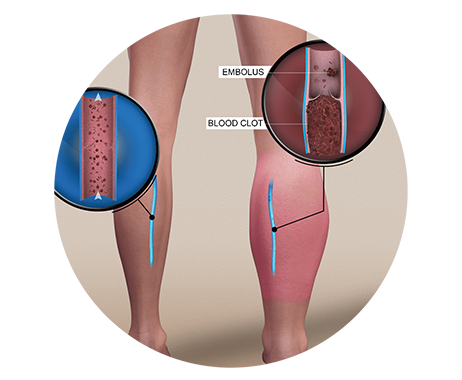
Key facts at a glance
- Nature: a chronic, progressive disease that does not resolve on its own.
- Six stages: telangiectasia → varicose veins → edema → skin discoloration → severe discoloration and ulceration → progressive ulcer.
- Chronic venous insufficiency: corresponds to stages 3–6.
- DVT: a clot in a deep vein, usually in one leg.
- Pulmonary embolism: a clot that travels to the lungs; a medical emergency.
- Emergency signs: sudden breathlessness, chest pain, or a hot, swollen, painful leg.
Are varicose veins just a cosmetic problem?
No. It is a common misconception that varicose veins are only bulging veins that look unpleasant. They are a circulation disorder: faulty valves let blood flow backwards and pool in the legs, raising the pressure in the veins. Some people have significant reflux without any visible bulging, and feel only heaviness, swelling or cramps. Treating the cause can relieve symptoms and slow progression.
How do varicose veins get worse over time?
Varicose veins tend to move through six stages:
- Telangiectasia: fine spider veins.
- Varicose veins: visible bulging veins.
- Edema: swelling, especially at the ankles.
- Skin discoloration: darkening and inflammation of the lower leg skin.
- Severe discoloration and ulceration.
- Progressive ulcer: an open wound that is slow to heal.
Not everyone progresses at the same speed, and many people stay in early stages for years. See varicose vein stages .
What complications can untreated varicose veins cause?
Chronic venous insufficiency
Stages 3 to 6 are known as chronic venous insufficiency . Ongoing high pressure damages the skin, causing swelling, inflammation, darkening and eventually skin breakdown and venous leg ulcers . Once ulcers develop, surgery becomes harder, and LEDAS often recommends ultrasound-guided sclerotherapy first.
Superficial thrombophlebitis
A clot and inflammation in a surface vein, causing a tender, red, firm cord under the skin. It needs medical assessment, partly because it can sometimes extend into deeper veins. See superficial thrombophlebitis .
Deep vein thrombosis (DVT)
A blood clot in a deep vein, most often in the leg. Signs include swelling of one leg, pain or tenderness, warmth, a pitting dent that is slow to spring back, and red or bluish skin. Long periods of immobility, some hormonal medicines and worsening venous disease raise the risk. Read DVT and varicose veins .
Pulmonary embolism
If part of a deep clot breaks off and travels to the lungs, it can block blood flow there. This causes breathlessness and chest pain and can be life-threatening. See pulmonary embolism risk .
Bleeding
Thin skin over a large varicose vein can occasionally be injured and bleed. Raise the leg and press firmly, and get medical help.
When should I see a doctor?
Book a vein assessment if you have aching, heaviness, ankle swelling, night cramps, itching, skin darkening, or visible bulging veins. A duplex ultrasound shows how far reflux extends. Read when to see a vein doctor .
When is it an emergency?
Call emergency services immediately if you have sudden shortness of breath, chest pain, coughing blood, a racing heart, or one leg becomes suddenly swollen, hot, red and painful. Do not wait for a clinic appointment.
Warning signs and what to do
| Sign | What it may mean | What to do |
|---|---|---|
| Heaviness, aching, evening swelling | Venous reflux | Book a vein assessment |
| Darkening, itchy or hardened skin | Chronic venous insufficiency | See a vein specialist soon |
| Open sore near the ankle | Venous ulcer | Prompt medical care |
| Red, tender, firm cord in a surface vein | Superficial thrombophlebitis | See a doctor promptly |
| One leg suddenly swollen, hot and painful | Possible DVT | Urgent care the same day |
| Sudden breathlessness or chest pain | Possible pulmonary embolism | Call emergency services now |
Varicose vein dangers – frequently asked questions
Can varicose veins cause a blood clot?
They can raise the risk. Slow, pooling blood makes clots more likely, especially with long periods of immobility, long flights or some hormonal medicines. Most clots linked to varicose veins are in surface veins, but deep vein thrombosis can occur. Read long-haul flights and DVT.
Can a varicose vein burst?
Occasionally, a vein close to thin skin can bleed after a knock or scratch. Lie down, raise the leg above heart level and press firmly on the spot with a clean cloth. Seek medical help, and have the vein assessed so it can be treated.
Are spider veins dangerous?
Spider veins themselves are usually harmless, but they can be the first visible stage of venous disease and sometimes sit over hidden reflux. An ultrasound shows whether larger veins are involved. See are spider veins cosmetic or medical.
Should I get treatment even if my veins don't hurt?
Not always. Some people with mild veins only need monitoring and lifestyle changes. But because the disease can progress silently, an ultrasound is worthwhile if veins are visible or your legs feel heavy. The doctor will advise whether treatment is needed now.
About this page
Clinical information:
LEDAS Varicose Vein Clinic, led by
Dr. Kim Byoung Joon , thoracic and cardiovascular surgeon, founding member of the Korean Society for Phlebology.
Medical reviewer:
Dr. Kim Byoung Joon ·
Review status:
Pending ·
Last updated:
October 2026
This page is general information and not a diagnosis. Treatment is decided only after an in-person examination. Read our
editorial policy .
Related: Complications of untreated varicose veins · Do varicose veins go away? · Can varicose veins come back? · Symptoms & warning signs · Varicose vein FAQ
Find out what stage your veins are at
English consultation available · +82-70-4895-5086 · kbjledaspm@gmail.com
