
Treatments · Recurrence
Varicose Vein Revision: The LEDAS Re-Operation Clinic
Quick answer: Varicose vein revision treats veins that return after earlier stripping, laser or injection treatment. At the LEDAS re-operation clinic in Busan, a detailed ultrasound first finds why the veins came back, such as new veins or reflux in previously healthy ones. The causes are then treated with laser and ultrasound-guided sclerotherapy under local anesthesia, without incisions.
Key facts at a glance
- Recurrent varicose veins are varicose veins that appear again after previous treatment.
- Why they return: new veins forming, reflux in previously normal veins (including perforators), or sources missed at the first treatment.
- LEDAS approach: find the cause first, then treat it; plans are individualized.
- Methods: EVLT laser and ultrasound-guided sclerotherapy (DGS/UGFS); local anesthesia, no incision.
- After revision: enrollment in the relapse prevention program with regular ultrasound checks.
- Overseas patients: preventive exams and any needed treatment on each return visit to Korea; an international coordinator translates at every stage.
Why do varicose veins come back after surgery?
It can feel discouraging to see bulging veins again after you have already had treatment. Recurrence is common in venous disease, because varicose veins are a chronic, progressive condition rather than a one-time problem. Even a well-performed operation removes the veins that were faulty at that time; it cannot stop new ones developing.
Dr. Kim Byoung Joon groups the causes of recurrence into three areas:
- Incomplete diagnosis. Leaking branches or perforator veins were not identified, so they were left untreated.
- Wrong treatment plan or method. The chosen technique did not suit the veins involved, or only visible veins were treated.
- Lack of preventive follow-up. New reflux developed but was not caught early.
Specific mechanisms include new vessels growing around a previous surgical site (neovascularization) and reflux developing in veins that were healthy before, including perforator veins. Read more in recurrent varicose veins and can varicose veins come back?
How does the LEDAS re-operation clinic work?
Step 1: find out why
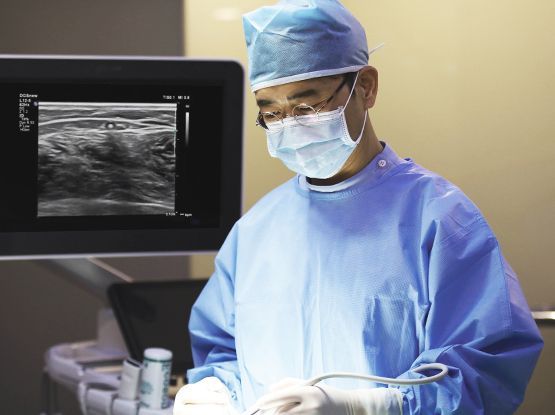
Every recurrence has a cause, and finding it is the most important part of revision care. Using Philips EPIQ Elite ultrasound, the doctor examines the whole leg, including scar areas from previous surgery, residual vein segments, perforators and the deep system. The examination can detect reflux in very small vessels. You can watch the screen while the findings are explained.
Step 2: treat the cause, not just the bulge
Recurrent veins are often tangled, irregular and close to scar tissue, which makes repeat open surgery difficult. LEDAS uses minimally invasive methods instead:
- EVLT for any remaining straight refluxing trunk, such as a residual saphenous segment.
- Duplex-guided sclerotherapy (DGS)/ UGFS for new tangled veins, perforators and branches near scars.
- Surface sclerotherapy for remaining visible spider and reticular veins.
All are done under local anesthesia without incisions, avoiding the long rehabilitation that repeat open surgery may involve. Treatment is usually staged: an initial session, then main treatment of the reflux veins with an examination after each session.
Step 3: prevent the next recurrence
After revision, patients join the relapse prevention program . Follow-up ultrasound every one to two years aims to catch new reflux while it is still small and simple to treat.
Who can use the re-operation clinic?
The clinic is for anyone whose varicose veins returned, regardless of where or how they were treated before, including after:
- Traditional stripping surgery or phlebectomy.
- Laser or radiofrequency ablation elsewhere.
- Sclerotherapy alone.
Bring any records you have, such as operation notes, earlier scan reports and dates. They help, but they are not required; the new ultrasound is what guides the plan.
What should international patients know?
Revision cases can need more than one stage, so plan your stay with the coordinator. Overseas patients receive preventive examinations and any needed treatment on each visit to Korea, and the international coordinator translates throughout. Between visits, you can stay in touch from home; see follow-up after you return home .
How much does revision treatment cost?
The first visit, with consultation and leg ultrasound, is 180,000 KRW. Treatment averages about 5,500,000 KRW per leg depending on stage, but recurrence cases vary widely. An exact quote is given after your ultrasound.
Common causes of recurrence and how they are treated
| Cause found on ultrasound | What it means | Typical LEDAS treatment |
|---|---|---|
| Residual saphenous trunk | Part of the main vein was left and still leaks | EVLT |
| Neovascularization | New tangled vessels around an old surgical site | Ultrasound-guided foam sclerotherapy |
| Perforator reflux | Connecting veins now leak from deep to surface | DGS / UGFS |
| New reflux in a different vein | Disease progression in a previously normal vein | EVLT or DGS depending on vein shape |
| Surface spider/reticular veins only | No major source found | Sclerotherapy (SCT) |
Varicose vein revision – frequently asked questions
Can varicose veins be treated again after stripping surgery?
Yes. After stripping, recurrence often comes from new vessels or reflux in other veins. Because repeat open surgery through scar tissue is difficult, LEDAS usually treats these with ultrasound-guided foam sclerotherapy and, where a straight trunk remains, laser, all under local anesthesia.
Is revision treatment harder than the first treatment?
It can be more complex, because recurrent veins are often irregular and spread out. That makes careful diagnosis more important. With minimally invasive methods, though, the experience for you is similar: local anesthesia, no incision and going home the same day.
Do I need my old surgery records?
They are helpful but not essential. Operation notes, dates and previous scan reports help the doctor understand what was done. The new ultrasound at LEDAS, however, is what shows the current situation and guides the plan.
How can I stop veins coming back after revision?
Regular follow-up is the most practical step, so new reflux is found while small. Staying active, managing weight and avoiding long periods of standing or sitting still also help. LEDAS enrolls revision patients in its relapse prevention program.
About this page
Clinical information:
LEDAS Varicose Vein Clinic, led by
Dr. Kim Byoung Joon , thoracic and cardiovascular surgeon, founding member of the Korean Society for Phlebology.
Medical reviewer:
Dr. Kim Byoung Joon ·
Review status:
Pending ·
Last updated:
October 2026
This page is general information and not a diagnosis. Treatment is decided only after an in-person examination. Read our
editorial policy .
Related: Recurrent varicose veins · Relapse prevention · Follow-up care · Second opinion · Foam sclerotherapy
Veins came back? Find out why
English consultation available · +82-70-4895-5086 · kbjledaspm@gmail.com
