
Vein Health Guides · Travel
How to Prevent DVT on Long-Haul Flights
Quick answer: To lower your risk of deep vein thrombosis on a long flight, get up and walk every hour or two, do seated ankle pumps and calf exercises often, drink water, limit alcohol, and wear loose clothing. If you have varicose veins or other risk factors, ask a doctor about medical compression stockings before you fly.
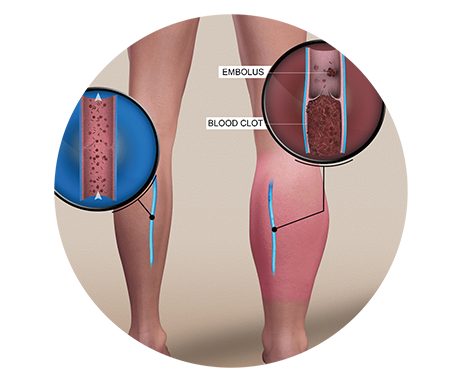
Key facts at a glance
- DVT: a blood clot in a deep vein, most often in the leg.
- Why flights matter: long immobility lets blood pool in the legs; this is sometimes called "economy class syndrome".
- Higher-risk travellers: previous clot, recent surgery, pregnancy, hormone therapy, cancer, obesity, varicose veins, older age.
- Simple protection: move hourly, ankle pumps, water, aisle seat, loose clothes.
- Stockings: medical compression stockings help prevent DVT on long flights.
- Emergency signs: one-leg swelling and pain, or chest pain and breathlessness, during or after travel.
What is DVT, and why do flights raise the risk?
Deep vein thrombosis (DVT) is a blood clot that forms in a deep vein, usually in the calf or thigh. Clots form more easily in the legs because they are furthest from the heart and blood pools there when the leg muscles are inactive.
On a long flight you sit in a cramped position for hours, often with your knees bent. Your calf muscle pump barely works, so blood flows slowly in the deep veins. Low cabin humidity and drinking alcohol or too little water can add to this. The popular name for the problem is economy class syndrome , although it can happen in any seat class and on long car, bus or train journeys too.
The danger is that part of a clot can break off and travel to the lungs, causing a pulmonary embolism . This is a medical emergency.
Who is at higher risk?
For most healthy travellers, the risk is low. It rises if you have:
- A previous DVT or pulmonary embolism, or a family history of clots.
- Recent surgery or injury, especially to the legs or hips.
- Pregnancy or a recent birth.
- Oral contraceptives or hormone therapy.
- Active cancer or cancer treatment.
- Obesity.
- Varicose veins or chronic venous insufficiency.
- Older age or limited mobility.
If you have several risk factors, talk to a doctor before flying. Some people may be advised to take additional measures.
How to prevent DVT on a long flight
Before you fly
- Talk to a doctor if you are in a higher-risk group.
- Get fitted for compression stockings if advised. Medical stockings apply graduated pressure, tightest at the ankle. See our stocking guide .
- Book an aisle seat so you can get up easily.
- Wear loose clothing and comfortable shoes.
During the flight
- Walk the aisle every hour or two when it is safe.
- Ankle pumps: point and flex your feet 15–20 times every 30 minutes.
- Calf squeezes and knee lifts while seated.
- Drink water regularly; limit alcohol and very caffeinated drinks.
- Avoid sleeping for long stretches in a cramped position, and don't take sleeping pills that keep you still for hours unless a doctor advised them.
- Keep the space under the seat in front clear so you can stretch your legs.
After you land
Take a walk soon after arrival. Clots can appear days to weeks after travel, so stay alert to warning signs.
What are the warning signs?
Seek emergency care immediately if you notice, during or after travel:
- Swelling, pain, tenderness or warmth in one leg, often the calf.
- Red or bluish skin on one leg.
- Sudden shortness of breath, chest pain that worsens on breathing in, a fast heartbeat or coughing up blood.
Flying to Korea for vein treatment
Many LEDAS patients fly long distances. Your coordinator can advise on timing, and our doctors will tell you when it is suitable to fly home after treatment, with stockings and movement during the flight. See flying after vein treatment and how many days you need in Korea .
If you already have varicose veins, a duplex ultrasound before frequent long-haul travel can clarify your risk.
Long-flight DVT checklist
| When | What to do | Why |
|---|---|---|
| Before booking | Ask a doctor if you have risk factors | Personalised advice |
| Seat choice | Aisle seat | Easier to stand and walk |
| Clothing | Loose clothes; stockings if advised | Avoid restricting blood flow |
| Every 30 min | Ankle pumps and calf squeezes | Activates the calf pump |
| Every 1–2 hours | Walk the aisle | Moves blood out of the legs |
| Throughout | Water; little alcohol | Avoid dehydration |
| Days after | Watch for one-leg swelling, chest pain | Clots can appear later |
Flights and DVT – frequently asked questions
How long does a flight need to be to raise DVT risk?
Risk is generally discussed for flights of about four hours or more, and it rises with longer journeys and multiple connecting flights. Any long period of sitting still, including car or bus travel, has a similar effect. Moving regularly is the key protection.
Do compression socks really help on flights?
Yes. Medical compression stockings apply graduated pressure that helps blood return from the legs, and they are used to help prevent DVT on long flights. Choose a properly fitted medical stocking rather than fashion socks, and ask a doctor which pressure suits you.
Is it safe to fly with varicose veins?
Most people with varicose veins can fly. Because venous disease is a risk factor for clots, take extra care: wear compression stockings, walk regularly, do ankle exercises and drink water. If you have had a clot before, see a doctor before travelling.
Should I take aspirin before a flight to prevent DVT?
Do not take aspirin or any blood thinner for travel without medical advice. Aspirin is not the standard way to prevent travel-related DVT, and it carries bleeding risk. People at high risk may be given specific advice by their doctor.
About this page
Clinical information:
LEDAS Varicose Vein Clinic, led by
Dr. Kim Byoung Joon , thoracic and cardiovascular surgeon, founding member of the Korean Society for Phlebology.
Medical reviewer:
Dr. Kim Byoung Joon ·
Review status:
Pending ·
Last updated:
October 2026
This page is general information and not a diagnosis. Treatment is decided only after an in-person examination. Read our
editorial policy .
Related: Flying after treatment · DVT & varicose veins · Pulmonary embolism risk · Compression stockings · International patients
Travelling often with varicose veins? Talk to a vein specialist
English consultation available · +82-70-4895-5086 · kbjledaspm@gmail.com
