
FAQ · Recurrence
Can Varicose Veins Come Back After Treatment?
Quick answer: Yes, varicose veins can come back, because the condition is chronic. A treated vein that is properly closed usually stays closed, but new veins can start leaking over time. Incomplete diagnosis, the wrong treatment plan and no follow-up raise the risk. LEDAS reduces it with detailed ultrasound mapping and regular check-ups every 1–2 years.
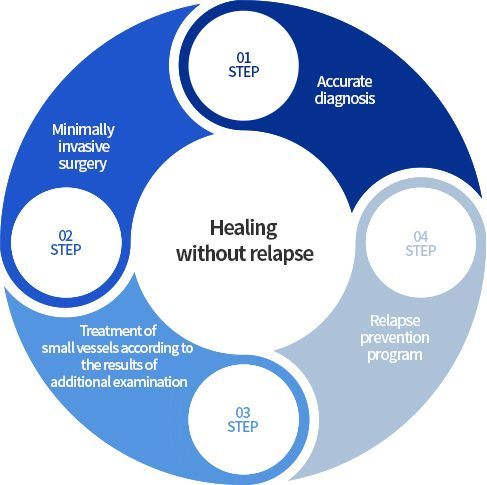
Key facts at a glance
- Why recurrence happens: new veins form, or previously healthy veins (including perforator veins) start to leak.
- Avoidable causes (per Dr. Kim): incomplete diagnosis, wrong treatment plan or method, lack of preventive follow-up.
- Prevention at LEDAS: detailed ultrasound, EVLT plus sclerotherapy of hidden veins, and a relapse prevention program.
- Follow-up: ultrasound every 1–2 years, or on each visit to Korea for overseas patients.
- If it recurs: LEDAS runs a dedicated re-operation clinic.
Why can varicose veins come back?
Varicose veins are a chronic disease of the vein walls and valves. Treatment closes the veins that are leaking now, but it cannot change the tendencies that caused them, such as family history, hormones, ageing or a job with long hours on your feet. Over time, two things can happen:
- New veins form in the treated area, sometimes as the body creates new pathways for blood.
- Healthy veins begin to leak , including perforator veins that connect the surface veins to the deep veins.
This is why recurrence is possible even after a technically good operation. It is also why follow-up matters so much.
What makes recurrence more likely?
Based on his experience in the clinic, Dr. Kim Byoung Joon identifies three common, avoidable causes of recurrent varicose veins:
- Incomplete diagnosis: if the ultrasound misses a leaking vein, that vein keeps feeding the problem.
- The wrong treatment plan or method: treating only the visible veins, or only the main vein, can leave sources of reflux behind.
- No preventive follow-up: small new leaks go unnoticed until they become visible varicose veins again.
How does LEDAS reduce the risk of recurrence?
Step 1: precise diagnosis
LEDAS uses four Philips EPIQ Elite ultrasound units to map both the large causal veins and the smallest leaking branches. Read about the duplex ultrasound exam .
Step 2: complete treatment
EVLT closes the main leaking saphenous vein. Duplex-guided sclerotherapy then treats hidden veins between the muscles, which LEDAS considers a key step in preventing recurrence. Sclerotherapy treats visible small veins.
Step 3: lifelong monitoring
The relapse prevention program includes check-up ultrasound every 1–2 years, even after full recovery. At each visit the doctor looks for new reflux and treats it early, often with a simple injection.
What if my veins have already come back after surgery elsewhere?
LEDAS runs a re-operation clinic for recurrent varicose veins. The team first works out why the recurrence happened, then plans individual treatment, usually with laser and ultrasound-guided sclerotherapy rather than further open surgery. Read recurrent varicose veins for more detail.
What can I do to lower my own risk?
- Walk at a moderate pace every day to keep your calf pump working.
- Avoid standing or sitting still for long periods; move your ankles often.
- Raise your legs above heart level when resting.
- Avoid frequent saunas and very hot baths.
- Keep to a healthy weight and limit salty, high-fat food.
- Keep your follow-up appointments.
More ideas are on how to prevent varicose veins .
Causes of recurrence and how they are addressed
| Cause | What happens | How LEDAS addresses it |
|---|---|---|
| Incomplete diagnosis | A leaking vein is missed | Detailed duplex ultrasound of large and small veins |
| Incomplete treatment | Hidden branches keep leaking | EVLT plus duplex-guided sclerotherapy |
| New veins forming | Fresh pathways for reflux | Ultrasound every 1–2 years; early injection |
| Perforator reflux | Connecting veins begin to leak | Targeted ultrasound-guided treatment |
| Previous surgery elsewhere | Recurrence after stripping or other methods | Re-operation clinic with individual plan |
Varicose vein recurrence – frequently asked questions
Does a vein closed by laser reopen?
A properly closed vein is gradually absorbed by the body and usually does not return. Recurrence more often comes from other veins that start leaking later. That is why follow-up ultrasound checks the whole leg, not just the treated vein.
How soon could varicose veins come back?
There is no fixed timeline. Some people stay clear for many years; others develop new leaking veins sooner, especially with strong family history or ongoing risk factors. Regular ultrasound every 1–2 years helps catch changes before they become visible.
Is recurrence more likely with stripping surgery?
LEDAS moved away from stripping partly because it found higher relapse and new vein abnormalities in the surgical field. Recurrence can follow any method, which is why diagnosis and follow-up matter. See laser vs stripping.
What happens at a LEDAS follow-up visit?
The doctor scans your legs with ultrasound to look for new reflux veins. If any are found, they can often be treated with ultrasound-guided sclerotherapy, which takes a few minutes. Overseas patients have this check whenever they visit Korea. Learn about follow-up care.
About this page
Clinical information:
LEDAS Varicose Vein Clinic, led by
Dr. Kim Byoung Joon , thoracic and cardiovascular surgeon, founding member of the Korean Society for Phlebology.
Medical reviewer:
Dr. Kim Byoung Joon ·
Review status:
Pending ·
Last updated:
October 2026
This page is general information and not a diagnosis. Treatment is decided only after an in-person examination. Read our
editorial policy .
Related: Do varicose veins go away? · Relapse prevention · Re-operation clinic · Are varicose veins dangerous? · Varicose vein FAQ
Veins back after treatment? Find out why
English consultation available · +82-70-4895-5086 · kbjledaspm@gmail.com
