
Compare · Thermal ablation
EVLT vs RFA: Laser vs Radiofrequency Ablation for Varicose Veins
Quick answer: EVLT and RFA both close a leaking vein from the inside with heat, guided by ultrasound and done under local (tumescent) anesthesia. EVLT uses laser light delivered through a thin fiber; RFA uses a catheter that heats the vein wall with radiofrequency energy. Both are well-established. LEDAS in Busan uses EVLT with a 1940nm laser, combined with sclerotherapy, and does not offer RFA.
Key facts at a glance
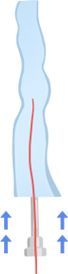
- EVLT (endovenous laser treatment): laser light via a hair-thin fiber heats and seals the vein wall.
- RFA (radiofrequency ablation): a catheter heats a segment of vein wall with radiofrequency energy, segment by segment.
- Shared features: thermal (heat) ablation, ultrasound guidance, tumescent local anesthesia, needle access, same-day home.
- Typical targets: straight refluxing saphenous trunks.
- Neither treats every vein: twisted branches usually need sclerotherapy or phlebectomy as well.
- At LEDAS: EVLT with 2 Diotech 1940nm laser units + duplex-guided sclerotherapy; RFA is not offered.
What do EVLT and RFA have in common?
EVLT and RFA belong to the same family: endovenous thermal ablation. In both, the doctor maps the veins with ultrasound, numbs the leg with local anesthetic, enters the faulty vein through a needle puncture, and passes a device up the vein. A dilute anesthetic solution (tumescent anesthesia) is injected around the vein to numb it, compress it and protect surrounding tissue from heat. Heat is then applied as the device is withdrawn, sealing the vein. The closed vein is gradually absorbed by the body.
Both methods are widely used, both are alternatives to traditional stripping surgery , and both generally allow you to walk out the same day.
How are EVLT and RFA different?
Energy source
In EVLT , a laser fiber emits light at a particular wavelength. The light is absorbed by the vein wall (or by blood, for older wavelengths) and turned into heat. In RFA, a catheter with a heating element touches the vein wall and warms it to a controlled temperature using radiofrequency energy.
Wavelength matters for lasers
Early lasers at 810–980nm were absorbed mainly by blood, and treatments with them were associated with more bruising and post-procedure soreness. Many comparisons between EVLT and RFA were made in that era. Modern water-targeted wavelengths, such as 1470nm and the 1940nm laser used at LEDAS, concentrate heat in the vein wall. When comparing the two methods today, it helps to know which laser is being discussed. See 1940nm vs 980nm/1470nm lasers .
How heat is delivered
RFA typically treats the vein in fixed-length segments, with a set heating cycle for each. EVLT delivers energy continuously as the fiber is withdrawn, and the operator adjusts energy to the vein's diameter. Each approach has advocates; both depend on correct positioning and technique.
Fiber and catheter size
Laser fibers are very thin, which can make them easier to pass through smaller or more irregular trunk segments. RFA catheters are somewhat thicker but very standardized.
Is one better than the other?
For most suitable veins, both are considered effective first-line options, and the differences in results between modern EVLT and RFA are generally modest. The factors that matter more for your outcome are:
- Whether every refluxing vein is found on ultrasound.
- Whether the trunk is closed along its full refluxing length.
- Whether branches and perforators are also treated.
- Whether you have follow-up to catch new reflux.
In other words, the clinic's diagnosis, planning and experience usually matter more than the choice between laser and radiofrequency.
Why does LEDAS use EVLT?
LEDAS built its system around laser plus ultrasound-guided sclerotherapy. The 1940nm wavelength is strongly absorbed by water in the vein wall, which suits the clinic's aim of sealing the vein while limiting heat spread. The thin fiber works well with the clinic's real-time ultrasound guidance on Philips EPIQ Elite systems. Branches that heat-based devices cannot follow are treated with duplex-guided sclerotherapy , and visible veins with sclerotherapy . LEDAS does not offer RFA.
Which should I choose?
If you are considering clinics that offer different methods, ask each one how they diagnose, which veins they will treat, how they handle branches, and what follow-up they provide. Our page on how to choose a vein clinic lists useful questions.
EVLT vs RFA side by side
| EVLT (laser) | RFA (radiofrequency) | |
|---|---|---|
| Energy | Laser light (e.g., 1470nm, 1940nm) | Radiofrequency heating element |
| Device | Hair-thin fiber | Catheter |
| Heat delivery | Continuous pullback, adjustable energy | Segmental heating cycles |
| Anesthesia | Tumescent local | Tumescent local |
| Incision | None (needle access) | None (needle access) |
| Branches & perforators | Need sclerotherapy or phlebectomy | Need sclerotherapy or phlebectomy |
| Available at LEDAS | Yes, 1940nm | No |
EVLT vs RFA – frequently asked questions
Is RFA less painful than EVLT?
Older studies often found less post-procedure discomfort with RFA than with early 810–980nm lasers. Newer water-targeted lasers such as 1470nm and 1940nm were developed partly to reduce that discomfort. With modern equipment, both are typically done under local anesthesia with mild, short-lived soreness afterward.
Does EVLT or RFA have a lower recurrence rate?
Both close treated veins effectively when done well. Recurrence is driven more by new reflux developing in other veins, missed branches and lack of follow-up than by the choice of energy source. Thorough ultrasound diagnosis and long-term monitoring matter most. See relapse prevention.
Can I have RFA at LEDAS?
No. LEDAS uses endovenous laser treatment with 1940nm diode lasers, combined with ultrasound-guided and surface sclerotherapy. If you have questions about whether laser suits your veins, the doctor will explain after your ultrasound examination.
Are EVLT and RFA covered by insurance?
Coverage depends on your insurer, your country and whether treatment is deemed medically necessary. LEDAS can provide medical documents in Korean or English to support a claim. See does insurance cover treatment?
About this page
Clinical information:
LEDAS Varicose Vein Clinic, led by
Dr. Kim Byoung Joon , thoracic and cardiovascular surgeon, founding member of the Korean Society for Phlebology.
Medical reviewer:
Dr. Kim Byoung Joon ·
Review status:
Pending ·
Last updated:
October 2026
This page is general information and not a diagnosis. Treatment is decided only after an in-person examination. Read our
editorial policy .
Related: EVLT vs VenaSeal · Laser vs stripping · Sclerotherapy vs laser · Laser wavelengths · EVLT
Comparing methods? Start with an accurate scan
English consultation available · +82-70-4895-5086 · kbjledaspm@gmail.com
