
Conditions · Complications
Complications of Untreated Varicose Veins
Quick answer: Left untreated, varicose veins can lead to chronic swelling, skin darkening and hardening, venous eczema, leg ulcers, bleeding from a fragile vein, painful clotted surface veins (superficial thrombophlebitis) and, less commonly, deep vein thrombosis, which can travel to the lungs as a pulmonary embolism — a medical emergency.
Key facts at a glance
- Most common: swelling and skin changes from chronic venous insufficiency (CEAP C3–C4).
- Ulcers: slow-healing sores near the ankle (C5–C6).
- Bleeding: thin skin over a varicose vein can bleed heavily after a minor knock.
- Superficial thrombophlebitis: a clot with inflammation in a surface vein — hard, red, tender cord.
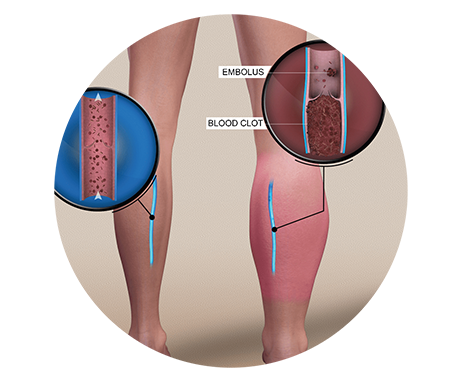
- Deep vein thrombosis (DVT): a clot in a deep vein, usually in one leg.
- Pulmonary embolism (PE): a clot reaching the lungs — call emergency services.
- Prevention: early diagnosis and treatment of reflux.
Why do untreated varicose veins cause complications?
Varicose veins are a chronic, progressive disease. Leaking valves keep pressure high in the lower leg day after day. Over time this pressure damages the skin and tissue, slows blood flow so clots form more easily, and stretches veins so thin that they can bleed. Not everyone develops complications, and many people live with varicose veins for years without them. But the risk grows the longer the disease goes untreated.
What are the skin complications?
Swelling and chronic venous insufficiency
The first stage is usually ankle swelling. As pressure continues, the skin becomes inflamed, darkens and hardens. This is chronic venous insufficiency , which covers CEAP stages C3 to C6.
Venous eczema and pigmentation
Red, itchy, flaky skin and brown patches around the ankle are common. Scratching can break the skin and lead to infection. See skin darkening and lipodermatosclerosis .
Venous leg ulcers
Damaged skin can break down into an open sore, usually above the inner ankle. Ulcers heal slowly and often come back unless the underlying reflux is treated. LEDAS notes that once skin necrosis or ulcers develop, surgery becomes harder, so non-surgical ultrasound-guided sclerotherapy is recommended first. See venous leg ulcers .
Can a varicose vein bleed?
Yes. A varicose vein just under thin skin, often near the ankle, can bleed heavily after a small knock or scratch, sometimes in the shower. If this happens:
- Lie down and raise the leg above the level of your heart.
- Press firmly on the spot with a clean cloth for at least 10 minutes.
- Seek medical care. If bleeding will not stop, call emergency services.
A vein that has bled once is likely to bleed again and should be treated.
What is superficial thrombophlebitis?
This is a blood clot with inflammation in a surface vein. The vein becomes a hard, red, warm, tender cord. It is usually not dangerous by itself, but it can extend into the deep veins, so it should be checked with ultrasound. See superficial thrombophlebitis .
What is deep vein thrombosis?
Deep vein thrombosis (DVT) is a blood clot in a deep vein, most often in the leg. Clots form more easily in the legs because they are furthest from the heart and blood pools when leg muscles are inactive. Risk factors include long periods of immobility, long flights, oral contraceptives, inherited clotting tendencies and worsening chronic venous disease.
Warning signs, usually in one leg:
- Pain or tenderness, often in the calf
- Swelling, sometimes with a dent that stays when pressed
- Warmth, and red or bluish skin
- More prominent surface veins
See deep vein thrombosis and varicose veins .
What is a pulmonary embolism?
A pulmonary embolism happens when part of a deep vein clot breaks away and blocks an artery in the lungs, reducing oxygen supply. Symptoms include sudden shortness of breath, chest pain that worsens with breathing, coughing up blood, a racing heart or fainting. It can be life-threatening and sometimes occurs without earlier warning signs. Call emergency services immediately if you notice these symptoms. See pulmonary embolism risk .
How can complications be prevented?
- Have symptomatic varicose veins checked with duplex ultrasound .
- Treat the leaking veins before skin damage develops. At LEDAS this is EVLT and sclerotherapy under local anesthesia.
- Walk daily, raise your legs when resting and avoid long periods without moving.
- Wear compression stockings when advised, especially on long flights.
- Keep up follow-up ultrasound every 1–2 years after treatment.
Complications: signs and urgency
| Complication | Key signs | Urgency |
|---|---|---|
| Swelling / CVI | Ankle swelling, heaviness by evening | Book a vein assessment |
| Skin changes | Darkening, itching, hard skin near ankle | See a specialist soon |
| Venous ulcer | Open sore that heals slowly | See a doctor promptly |
| Bleeding vein | Sudden bleeding from a surface vein | Raise leg, press firmly, seek care; emergency if it won't stop |
| Superficial thrombophlebitis | Hard, red, tender cord along a vein | See a doctor within 1–2 days |
| Deep vein thrombosis | One leg painful, swollen, warm, discolored | Urgent same-day care |
| Pulmonary embolism | Sudden breathlessness, chest pain, coughing blood | Call emergency services now |
Varicose vein complications – frequently asked questions
Do varicose veins cause blood clots?
Varicose veins raise the risk of clots, mainly in surface veins (superficial thrombophlebitis). The risk of deep vein thrombosis is also higher than in people without vein disease, especially with immobility or long flights. Most people with varicose veins never develop a deep clot, but warning signs should never be ignored.
How long does it take for complications to develop?
It varies widely, from a few years to decades. Skin changes and ulcers usually follow many years of untreated reflux, often with risk factors like standing work or excess weight. Regular review with ultrasound helps you and your doctor judge when to treat.
Can varicose veins burst?
A varicose vein does not explode, but thin skin over it can break and bleed heavily after a minor injury. Raise the leg, press firmly for at least 10 minutes and seek medical care. A vein that has bled should be treated to prevent repeat bleeding.
Can treating varicose veins prevent ulcers?
Treating the leaking veins lowers pressure in the leg, which reduces the risk of skin damage and helps existing ulcers heal and stay healed. Compression and follow-up support this. Earlier treatment, before the skin is damaged, is generally simpler. See LEDAS treatment system.
About this page
Clinical information:
LEDAS Varicose Vein Clinic, led by
Dr. Kim Byoung Joon , thoracic and cardiovascular surgeon, founding member of the Korean Society for Phlebology.
Medical reviewer:
Dr. Kim Byoung Joon ·
Review status:
Pending ·
Last updated:
October 2026
This page is general information and not a diagnosis. Treatment is decided only after an in-person examination. Read our
editorial policy .
Related: Deep vein thrombosis · Pulmonary embolism risk · Chronic venous insufficiency · Venous leg ulcers · Are varicose veins dangerous?
Treat varicose veins before complications start
English consultation available · +82-70-4895-5086 · kbjledaspm@gmail.com
