
Conditions · Causes
What Causes Varicose Veins?
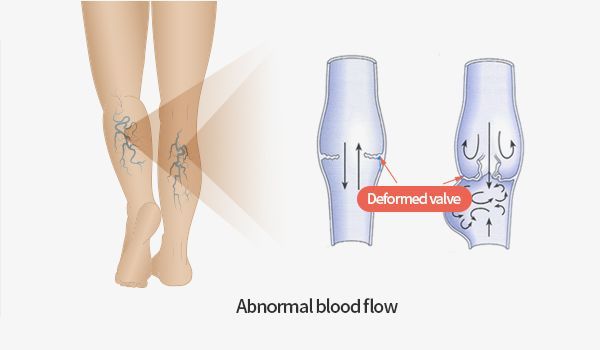
Quick answer: Varicose veins are caused by failing one-way valves inside the leg veins and a calf-muscle pump that no longer pushes blood upward well. Blood then pools and stretches the veins. Your risk rises with family history, pregnancy and female hormones, long hours standing or sitting, ageing, excess weight and an inactive lifestyle.
Key facts at a glance
- Mechanism 1: vein valves fail, so blood flows backwards (reflux).
- Mechanism 2: calf muscles stop pumping blood upward effectively.
- Result: higher venous pressure stretches and deforms vein walls.
- Congenital factors: weak vein walls, family history.
- Acquired factors: standing or sitting jobs, pregnancy and hormones, ageing, obesity, lifestyle.
- Heredity (per LEDAS clinical guidance): with both parents affected, risk exceeds 90%.
Why do veins become varicose?
Your leg veins have to move blood uphill to your heart. They rely on two systems working together:
- Vein valves — small one-way flaps inside the vein that open to let blood upward and close to stop it falling back.
- The calf-muscle pump — each time your calf muscles contract, they squeeze the deep veins and push blood towards the heart. That is why walking helps circulation.
Varicose veins develop when one or both of these systems fail. Blood that should flow upward leaks backwards and collects in the lower leg. The extra pressure stretches the vein walls, which become longer, wider and twisted. Stretched walls also pull the valve flaps further apart, so more valves leak — a cycle that explains why the condition tends to progress. Read our full guide to varicose veins .
What are the main risk factors?
Family history and heredity
Genes influence the strength of your vein walls and valves. LEDAS's clinical guidance notes that if one parent has varicose veins, the chance is about 25% for a son and 62% for a daughter; if both parents are affected, it rises to over 90%. If varicose veins run in your family, an early check is worthwhile. See are varicose veins hereditary?
Long hours standing or sitting
When you stand or sit still, your calf muscles barely move and blood stagnates in the legs. Teachers, nurses, hairdressers, retail and factory staff, drivers, office workers and students who sit for long periods are all at higher risk. People who are bedridden are at risk of both varicose veins and blood clots. See varicose veins and standing jobs and leg health for office workers .
Pregnancy and female hormones
Female hormones relax the walls of blood vessels, making veins easier to stretch. During pregnancy, blood volume increases, the growing womb presses on veins in the pelvis and weight rises — all of which add pressure to the leg veins. Varicose veins often improve after birth but may not fully disappear, and each pregnancy can add to the problem. See varicose veins in pregnancy .
Ageing and injury
With age, vein walls lose elasticity and valves weaken, so reflux becomes more likely. Calf muscles also tend to weaken, reducing the pumping action. Previous leg injury or surgery can damage veins and valves.
Excess weight
Extra body weight increases the load on your legs and the pressure inside the veins. More blood volume dilates the veins and weakens their walls over time. See weight, obesity and varicose veins .
Lifestyle habits
Lack of exercise, smoking, heavy drinking, very salty or high-fat food, and frequent saunas or hot baths can all disturb venous circulation and widen veins.
Can you prevent varicose veins?
You cannot change your genes or age, but you can reduce strain on your veins:
- Walk briskly every day to keep your calf pump active.
- Raise your legs above heart level when resting.
- Change position often if you stand or sit for work.
- Keep to a healthy weight and limit salty food.
- Avoid long, very hot baths and saunas.
- Consider medical compression stockings if you are at high risk.
See how to prevent varicose veins .
Why does knowing the cause matter for treatment?
The visible bulges are usually fed by a leaking vein higher up or deeper in the leg. Treating only what you can see often leads to recurrence. At LEDAS, Dr. Kim Byoung Joon uses a standing duplex ultrasound to find the real source of reflux before planning EVLT and sclerotherapy.
Varicose vein risk factors and what you can do
| Risk factor | How it affects veins | Can you change it? | What helps |
|---|---|---|---|
| Family history | Inherited weaker walls and valves | No | Earlier ultrasound check |
| Standing or sitting job | Calf pump inactive; blood stagnates | Partly | Move often, calf exercises, stockings |
| Pregnancy & hormones | Relaxed vein walls, more blood volume | Partly | Leg elevation, stockings, review after birth |
| Ageing | Less elastic veins, weaker calf muscles | No | Stay active, strengthen calves |
| Excess weight | Higher pressure in leg veins | Yes | Gradual weight loss, regular walking |
| Lifestyle | Inactivity, smoking, salt and heat widen veins | Yes | Daily walks, less salt, avoid long saunas |
Causes of varicose veins – frequently asked questions
Does crossing your legs cause varicose veins?
There is no good evidence that crossing your legs causes varicose veins. What matters more is staying in any one position for a long time, which keeps your calf muscles inactive. Changing position, standing up and walking regularly are more useful than avoiding leg-crossing.
Can running or weight training cause varicose veins?
Regular exercise generally helps veins because it strengthens the calf-muscle pump. Very heavy straining may raise pressure briefly, but it is not a main cause. If you already have varicose veins, ask your doctor about the right kind of exercise. See sports, running and your veins.
Why are women more likely to get varicose veins?
Female hormones relax vein walls, and pregnancy adds extra blood volume, weight and pressure on pelvic veins. Inherited risk also appears higher in daughters. Men still get varicose veins, often seeking help later. See varicose veins in men.
Can young people get varicose veins?
Yes. A strong family history, long hours of sitting while studying or working, or pregnancy can lead to varicose veins in your twenties or thirties. Early assessment allows simpler treatment. Read varicose veins in young adults.
About this page
Clinical information:
LEDAS Varicose Vein Clinic, led by
Dr. Kim Byoung Joon , thoracic and cardiovascular surgeon, founding member of the Korean Society for Phlebology.
Medical reviewer:
Dr. Kim Byoung Joon ·
Review status:
Pending ·
Last updated:
October 2026
This page is general information and not a diagnosis. Treatment is decided only after an in-person examination. Read our
editorial policy .
Related: Varicose veins guide · Symptoms · Hereditary varicose veins · Pregnancy · Prevention tips
At risk of varicose veins? Get your legs checked
English consultation available · +82-70-4895-5086 · kbjledaspm@gmail.com
