
About LEDAS · Equipment
Philips EPIQ Elite Vascular Ultrasound for Vein Diagnosis
Quick answer: The Philips EPIQ Elite is a premium ultrasound system that shows vein size, shape, blood-flow direction and valve function in real time. LEDAS uses four units to map every leaking leg vein before treatment, guide the laser and injections during treatment, and check for new reflux at follow-up — with no radiation or contrast dye.
Key facts at a glance
- System: Philips EPIQ Elite premium vascular ultrasound with a 24-inch LED monitor.
- Units at LEDAS: 4.
- What it shows: vein size and shape, flow direction and speed, and whether valves close properly.
- Safety: non-invasive — no needles, radiation or contrast dye.
- Exam time: about 15–20 minutes, with real-time explanation.
- Used at three stages: diagnosis, guidance during treatment, and follow-up for relapse prevention.
What is the Philips EPIQ Elite?
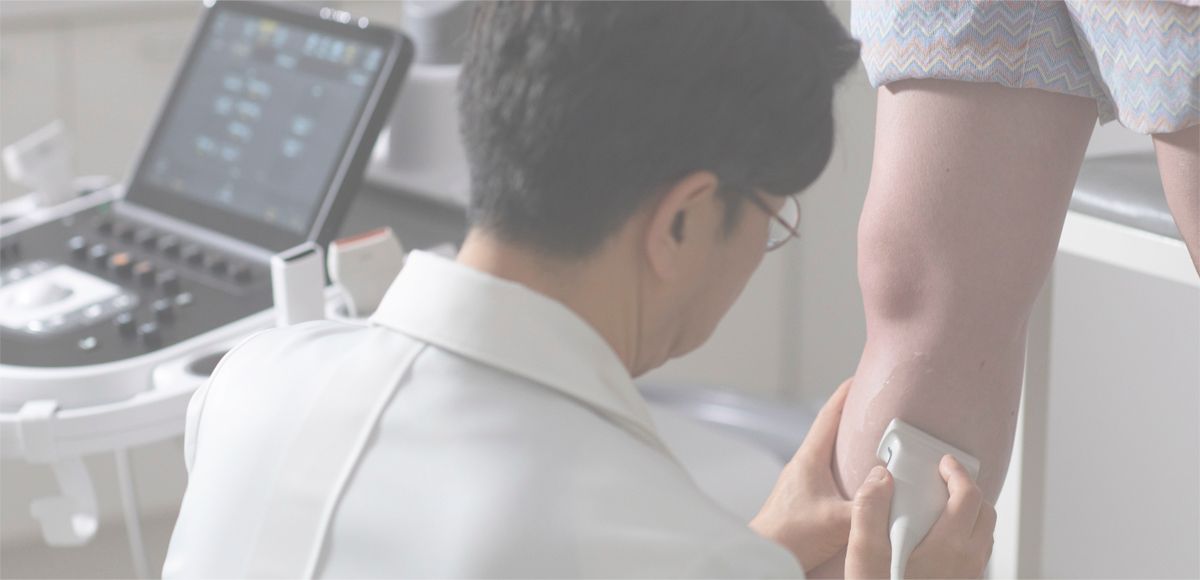
The EPIQ Elite is a premium ultrasound platform made by Philips. Ultrasound uses high-frequency sound waves to create live pictures of the inside of the body. In vein care, it is used as duplex ultrasound : it shows the structure of the vein (a grey-scale image) and the movement of blood inside it (color and spectral Doppler) at the same time. LEDAS has four EPIQ Elite units, each connected to a large 24-inch monitor so you can watch the scan with the doctor.
Why does ultrasound quality matter for varicose veins?
Varicose veins are the visible result of a hidden problem: valves inside the veins that no longer close, letting blood flow backwards (reflux). The bulging veins you can see are often fed by a leaking trunk vein, such as the great or small saphenous vein, or by perforator veins that link the surface veins to the deep system.
If even one source of reflux is missed, varicose veins tend to return. Dr. Kim Byoung Joon considers an incomplete diagnosis one of the three main causes of recurrence. High-resolution imaging helps the doctor see:
- The main refluxing trunk veins and exactly where the leak starts and stops.
- Small tributaries and perforator veins hidden between muscles.
- The deep veins, to make sure they are open and working before any treatment.
- Signs of blood clots that need different management.
How is the ultrasound exam done at LEDAS?
- Preparation: you change into shorts. The doctor briefly shows you how to read the screen.
- Standing scan: you stand on a custom examination table, because reflux is easiest to detect when gravity pulls blood down.
- Mapping: the doctor moves the probe along each leg, squeezing the calf or asking you to bear down to test the valves.
- Real-time explanation: you see the colors change as blood flows the wrong way, and the doctor explains what it means.
- Plan: the findings are used to build your treatment plan. See how your treatment plan is built .
The exam takes about 15–20 minutes. It is painless; the gel can feel cool. Read more about the duplex ultrasound exam and venous reflux testing .
How is ultrasound used during treatment?
During EVLT , ultrasound guides the needle into the vein, shows the laser fiber's position and helps place the local anesthetic around the vein. During duplex-guided sclerotherapy , it lets the doctor inject foam precisely into veins that cannot be seen from the skin and watch it spread. This is why the treatment can be done without incisions.
How is ultrasound used after treatment?
After treatment, ultrasound confirms that the treated veins are closed and checks the deep veins. In the long term, LEDAS invites patients for a follow-up scan every 1–2 years, or whenever overseas patients return to Korea, to look for new reflux before it becomes visible. This is the core of the relapse prevention program .
Is vascular ultrasound safe?
Yes. Ultrasound uses sound waves, not ionizing radiation, and no contrast dye is injected. It can be repeated as often as needed, including during pregnancy, which makes it the standard first test for leg vein disease.
How LEDAS uses ultrasound at each stage
| Stage | What ultrasound does | Why it matters |
|---|---|---|
| Diagnosis | Maps refluxing trunk, tributary and perforator veins; checks deep veins | A complete map reduces missed sources of reflux |
| EVLT | Guides needle entry, fiber position and local anesthetic | Allows treatment through a needle puncture instead of an incision |
| Duplex-guided sclerotherapy | Guides foam into hidden veins and shows its spread | Treats veins that cannot be seen from the skin |
| Right after treatment | Confirms closure; checks deep veins | Early safety check |
| Follow-up (every 1–2 years) | Looks for new reflux | Finds problems before they become visible varicose veins |
EPIQ Elite vein ultrasound – frequently asked questions
Does a vein ultrasound hurt?
No. A vein ultrasound is painless. Gel is spread on your skin and a probe is moved along your leg. The doctor may squeeze your calf briefly to test the valves, which feels like light pressure. There are no needles, radiation or dye, and you can return to normal activity straight away.
Why do I need to stand during the scan?
Faulty vein valves leak most when gravity pulls blood downward. Scanning while you stand makes reflux visible that can be missed lying down. LEDAS uses custom tables that let you stand steadily and safely throughout the exam.
Can I bring ultrasound results from another clinic?
Yes, please bring any reports or images. They help the doctor understand your history. LEDAS will still perform its own full scan before treatment, because the plan must be based on the current state of your veins. See second opinion for varicose veins.
How much does the first ultrasound cost?
The first visit at LEDAS, including consultation and leg vein ultrasound, costs 180,000 KRW. Treatment costs depend on your findings, so an exact quote is given after the scan. Read more about the first visit and ultrasound fee.
About this page
Clinical information:
LEDAS Varicose Vein Clinic, led by
Dr. Kim Byoung Joon , thoracic and cardiovascular surgeon, founding member of the Korean Society for Phlebology.
Medical reviewer:
Dr. Kim Byoung Joon ·
Review status:
Pending ·
Last updated:
October 2026
This page is general information and not a diagnosis. Treatment is decided only after an in-person examination. Read our
editorial policy .
Related: 1940nm laser · Duplex ultrasound exam · Venous reflux testing · Clinic facility · Your first visit
See your own veins on screen – book an ultrasound
English consultation available · +82-70-4895-5086 · kbjledaspm@gmail.com
