
Conditions · Varicose Veins
What Are Varicose Veins? A Complete Guide
Quick answer: Varicose veins are enlarged, twisted veins, usually in the legs, caused by faulty one-way valves that let blood flow backwards and pool. This raises pressure in the veins, which stretch and bulge. They are a chronic, progressive condition that can cause aching, heaviness, swelling and skin changes, and they do not go away on their own.
Key facts at a glance
- Definition: a chronic venous disease in which leg veins enlarge because blood flows backwards (reflux) and pools.
- Two root causes: failing vein valves and a weak calf-muscle pump.
- Not just cosmetic: symptoms can appear before any vein bulges.
- Progressive: graded by the CEAP system from C0 to C6.
- Possible complications: skin damage, ulcers, superficial phlebitis, deep vein thrombosis.
- Diagnosis: duplex ultrasound, ideally while standing.
- At LEDAS: EVLT + sclerotherapy under local anesthesia, no incision, same-day discharge.
What are varicose veins?
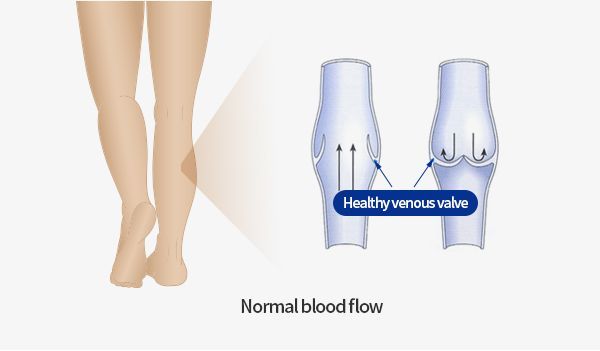
Veins carry blood from your body back to your heart. In your legs, that blood has to travel upwards against gravity. Two things make this possible: small one-way valves inside the veins that stop blood falling back, and your calf muscles , which squeeze the veins like a pump every time you walk.
When valves weaken or the pump stops working well, blood flows the wrong way — called venous reflux — and collects in the lower leg. The pressure inside the veins rises, their walls stretch and they become wider, longer and twisted. These are varicose veins. They most often affect the great saphenous vein (running up the inside of the leg) and the small saphenous vein (at the back of the calf), and their branches.
Varicose veins are more than a cosmetic problem
A common misconception is that varicose veins are simply bulging veins. In fact, reflux can cause heaviness, aching and swelling even when nothing is visible, because the leaking vein may be deep under the skin. That is why a scan is more reliable than appearance alone.
What causes varicose veins?
Causes fall into two groups. Congenital factors include naturally weaker vein walls and family history. Acquired factors include long periods of standing or sitting, pregnancy and hormones, ageing, excess weight and lifestyle habits such as inactivity and frequent saunas. Read more on what causes varicose veins .
What are the symptoms?
- Bulging, twisted blue or purple veins
- Heavy, tired or aching legs, often worse in the evening
- Swelling around the ankles and feet
- Night cramps
- Itching or dry skin on the lower leg
- Darkening or hardening of the skin near the ankle
See varicose vein symptoms and warning signs , or try our self-check checklist .
How do varicose veins progress?
Varicose veins are a chronic, progressive disease. Doctors use the CEAP classification to describe severity, from C0 (no visible signs) through spider veins (C1), varicose veins (C2), swelling (C3), skin changes (C4) to healed (C5) and open (C6) ulcers. The later stages are known as chronic venous insufficiency . See varicose vein stages (CEAP) .
Are varicose veins dangerous?
Most varicose veins are not an emergency, but untreated disease can lead to skin damage, leg ulcers, bleeding, inflamed clotted surface veins (superficial thrombophlebitis) and, less often, deep vein thrombosis (DVT). Seek emergency care if you develop sudden breathlessness, chest pain or coughing blood, or a painful, hot, swollen leg. Read complications of untreated varicose veins .
How are varicose veins diagnosed?
The standard test is duplex ultrasound , which shows both the vein and the direction of blood flow. At LEDAS, Dr. Kim Byoung Joon scans your legs while you stand, using Philips EPIQ Elite systems, and explains the findings on screen in about 15–20 minutes. See the duplex ultrasound exam .
How are varicose veins treated?
Treatment aims to close the leaking veins so blood re-routes through healthy ones. At LEDAS this follows three steps:
- Diagnosis: a complete ultrasound map of every leaking vein.
- Treatment: EVLT with a 1940nm laser for main trunk veins; duplex-guided sclerotherapy for hidden veins; sclerotherapy for small visible veins. All under local anesthesia, with no incision and same-day discharge.
- Relapse prevention: follow-up ultrasound every 1–2 years.
Compression stockings can relieve symptoms but do not cure varicose veins. The first visit (consultation and ultrasound) costs 180,000 KRW; treatment averages about 5,500,000 KRW per leg depending on stage, with an exact quote after ultrasound.
Types of visible leg veins compared
| Spider veins | Reticular veins | Varicose veins | |
|---|---|---|---|
| Size | Under 1 mm | 1–3 mm | 3 mm or more |
| Appearance | Fine red or purple lines | Flat blue-green veins | Bulging, twisted veins |
| CEAP class | C1 | C1 | C2 |
| Usual symptoms | Often none; sometimes burning | Mild aching possible | Heaviness, aching, swelling, cramps |
| Typical LEDAS treatment | Sclerotherapy | Sclerotherapy | EVLT + duplex-guided sclerotherapy |
Varicose veins – frequently asked questions
Do varicose veins go away on their own?
No. Once a vein valve fails, it does not repair itself, so varicose veins persist and tend to slowly worsen. Lifestyle changes and compression stockings can ease symptoms but do not close the leaking vein. Read can varicose veins go away on their own?
Who gets varicose veins?
Anyone can, but risk is higher with a family history, in women (especially during and after pregnancy), with age, with excess weight and in jobs involving long periods of standing or sitting. Men are also commonly affected and often seek help later.
When should I see a doctor about varicose veins?
See a vein specialist if your legs ache, feel heavy, swell or cramp, if the skin near your ankle darkens or itches, or if a vein bleeds or becomes hard and painful. Early ultrasound helps plan simpler treatment. See when to see a vein doctor.
Is varicose vein treatment painful?
At LEDAS treatment is done under local anesthesia, so you are awake but the area is numbed. Most people feel brief stinging from the injections and some pressure, followed by tightness for one to two weeks. Read is varicose vein treatment painful?
Can varicose veins come back after treatment?
They can, because vein disease is chronic and new veins may start to leak over time. Complete diagnosis, treating every source of reflux and regular follow-up ultrasound reduce this risk. LEDAS recommends a check every 1–2 years. See recurrent varicose veins.
About this page
Clinical information:
LEDAS Varicose Vein Clinic, led by
Dr. Kim Byoung Joon , thoracic and cardiovascular surgeon, founding member of the Korean Society for Phlebology.
Medical reviewer:
Dr. Kim Byoung Joon ·
Review status:
Pending ·
Last updated:
October 2026
This page is general information and not a diagnosis. Treatment is decided only after an in-person examination. Read our
editorial policy .
Related: Causes · Symptoms · CEAP stages · Complications · LEDAS treatment system · Spider veins
Find out what is causing your varicose veins
English consultation available · +82-70-4895-5086 · kbjledaspm@gmail.com
