
Conditions · Recurrence
Recurrent Varicose Veins: Why They Came Back After Surgery
Quick answer: Varicose veins can return after stripping, laser or injections because new veins form, previously healthy veins start to reflux, or some leaking veins were missed. LEDAS links recurrence to incomplete diagnosis, the wrong treatment plan, or lack of follow-up. A fresh duplex ultrasound shows exactly where the new reflux is so it can be treated precisely.
Key facts at a glance
- Recurrent varicose veins: varicose veins that appear again in a leg that was treated before.
- Common after any method: stripping, ambulatory phlebectomy, laser or sclerotherapy.
- Main mechanisms: new vein growth, reflux in previously normal veins (including perforators), and veins missed at the first treatment.
- Causes named by Dr. Kim Byoung Joon: incomplete diagnosis, wrong treatment plan or method, lack of preventive follow-up.
- LEDAS service: a dedicated re-operation clinic plus a relapse prevention program.
- Methods used: EVLT laser and ultrasound-guided sclerotherapy (DGS/UGFS), local anesthesia only.
Why do varicose veins come back after surgery?
It is discouraging to see bulging veins return after going through treatment. You are not alone, and it does not necessarily mean the first doctor did a poor job. Varicose vein disease is chronic: the tendency that caused the first veins often remains. LEDAS states plainly that recurrence risk is significant even after a well-performed operation.
There are three main reasons veins return:
1. New veins form (neovascularization)
After a vein is tied off or removed, especially at the groin after stripping, the body can grow small new vessels in the healing area. These are often thin-walled and leaky, and can reconnect the deep and surface systems, restarting reflux.
2. Previously normal veins start to leak
Valves in veins that were healthy at the time of the first operation can fail later. This includes perforator veins , which connect the deep and surface systems through the muscle, and the accessory saphenous veins.
3. Some veins were not treated the first time
If the original scan did not map every refluxing segment, some leaking veins remain and gradually enlarge. This is why Dr. Kim Byoung Joon lists incomplete diagnosis and a wrong treatment plan or method as leading causes, together with lack of preventive follow-up .
Are recurrent veins more common after stripping?
Traditional stripping surgery pulls out the main vein through incisions. The groin wound heals with scar tissue, where new vessel growth often occurs. LEDAS lists a high relapse rate, new vein abnormalities in the surgical field and perforator reflux among the drawbacks of stripping and ambulatory phlebectomy. Recurrence is possible after any method, however, including laser, which is why follow-up matters whatever treatment you had.
How does the LEDAS re-operation clinic work?
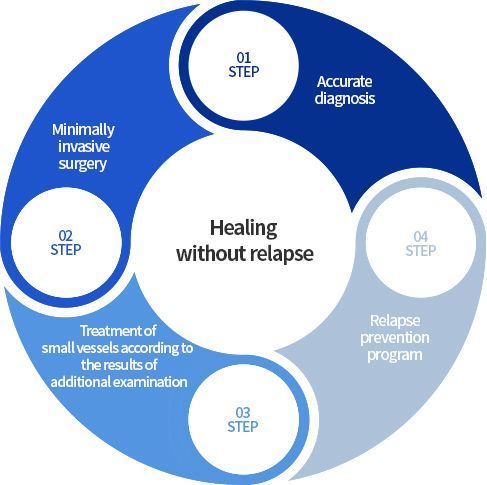
LEDAS runs a dedicated re-operation clinic for people whose veins returned. Its approach has three parts:
- Accurate diagnosis. A detailed duplex ultrasound on Philips EPIQ Elite equipment maps old scar areas, new vessels, perforators and any remaining saphenous segments. The goal is to understand why your veins recurred, not only where.
- Minimally invasive treatment. Scarred tissue makes repeat open surgery difficult. LEDAS uses EVLT for straight refluxing segments and duplex-guided sclerotherapy (DGS/UGFS) for tortuous new vessels and perforators, which are often ideal targets for foam. All under local anesthesia, with no incision and same-day discharge.
- Relapse prevention. Treatment is followed by re-examination after each session and long-term monitoring.
The number of sessions depends on your condition and is planned after the scan.
What should I bring to my appointment?
- Any operation notes or discharge summaries from your previous treatment
- Earlier ultrasound reports or images, if available
- The approximate date and type of each procedure
- A list of current medicines, especially blood thinners
Documents in any language help; our international coordinators can assist with translation.
How can I lower the risk of another recurrence?
No one can promise that veins will never return. What helps most is finding new reflux early, while it is small. The LEDAS relapse prevention program includes a follow-up ultrasound every one to two years, or each time an overseas patient visits Korea, even after full recovery. Small new leaks can then be treated with a quick injection instead of a larger procedure. Daily walking, avoiding long periods of standing still, and compression stockings when advised also help.
Why veins recur, and how LEDAS addresses each cause
| Cause of recurrence | What happens | LEDAS response |
|---|---|---|
| Incomplete diagnosis | Some refluxing veins were never mapped | Full standing duplex ultrasound before any treatment |
| Wrong plan or method | Treatment did not match the reflux pattern | Individual plan combining EVLT, DGS and SCT |
| New vessel growth | Small new veins form in scar tissue | Ultrasound-guided foam sclerotherapy |
| New reflux in healthy veins | Perforators or other veins start to leak | Targeted laser or injection after scan |
| No follow-up | Small leaks grow unnoticed | Ultrasound every 1–2 years, lifelong |
Recurrent varicose veins – frequently asked questions
Can varicose veins be treated again after stripping?
Yes. Even if the main vein was removed, new or remaining refluxing veins can usually be closed with laser or ultrasound-guided foam sclerotherapy. These methods work through needle punctures, so they avoid reopening scarred tissue. A detailed ultrasound first shows which option suits each vein.
How soon after surgery can veins come back?
It varies. Some people notice veins within a year or two, often because some reflux was untreated. Others see recurrence many years later as new veins develop. Regular ultrasound checks can catch changes before they become visible bulging veins.
Is treating recurrent veins more painful than the first time?
Not usually, when needle-based methods are used. At LEDAS, treatment uses local anesthesia only, and injections take only minutes. Some pulling discomfort for one to two weeks after laser is common. See is varicose vein treatment painful?
I was treated in another country. Can LEDAS help?
Yes. Many patients at the re-operation clinic were treated elsewhere. Bring any records you have; a new ultrasound will map the current situation. Overseas patients receive preventive exams and any needed treatment on each return visit to Korea.
Will my insurance cover a second treatment?
It depends on your insurer and policy. Korean National Health Insurance holders should check with the LEDAS international coordinator, as some costs may be covered. Overseas patients should ask their insurer directly; see does insurance cover treatment?
About this page
Clinical information:
LEDAS Varicose Vein Clinic, led by
Dr. Kim Byoung Joon , thoracic and cardiovascular surgeon, founding member of the Korean Society for Phlebology.
Medical reviewer:
Dr. Kim Byoung Joon ·
Review status:
Pending ·
Last updated:
October 2026
This page is general information and not a diagnosis. Treatment is decided only after an in-person examination. Read our
editorial policy .
Related: Re-operation clinic · Relapse prevention program · Can varicose veins come back? · Laser vs stripping · Second opinion
Veins back again? Find out why before you treat them
English consultation available · +82-70-4895-5086 · kbjledaspm@gmail.com
