
Conditions · Complications
Superficial Thrombophlebitis: Clots in Surface Veins
Quick answer: Superficial thrombophlebitis is inflammation of a vein just under the skin caused by a blood clot inside it. It appears as a red, warm, tender, hard cord, very often in a varicose vein. It is usually not dangerous on its own, but it should be checked with ultrasound within a day or two because some clots extend into the deep veins.
Key facts at a glance
- Also called: superficial vein thrombosis (SVT) or phlebitis.
- What you notice: a painful, hard, red or brownish cord along a vein, often warm to touch.
- Where: most often in varicose veins of the calf or thigh; can also follow an IV drip in the arm.
- Why it matters: a clot near the groin or behind the knee can extend into the deep veins and become a DVT.
- Test: duplex ultrasound to measure the clot's length and distance from the deep veins.
- Long-term fix: treating the underlying varicose veins once the acute episode settles.
What is superficial thrombophlebitis?
The word breaks into three parts: superficial (near the skin), thrombo (clot) and phlebitis (inflamed vein). A clot forms in a surface vein and the vein wall and surrounding tissue become inflamed. The vein feels like a firm rope under the skin, and the skin over it turns red or purple, then brown as it heals.
It is different from deep vein thrombosis (DVT) , which occurs in the large veins inside the muscles. Surface clots are generally less dangerous, but the two can be linked, and some people have both at the same time.
Why does it happen in varicose veins?
Blood in varicose veins moves slowly and swirls in widened, twisted segments instead of flowing smoothly upward. Slow flow is one of the main conditions for clotting. Other triggers include:
- Long periods without moving, such as long flights or bed rest
- A knock or injury to a varicose vein
- Pregnancy, hormone treatment or oral contraceptives
- Recent surgery
- Inherited clotting tendencies
- Repeated episodes without obvious cause, which should prompt further medical checks
When is it urgent?
Book an assessment within a day or two for any painful, hardened vein. Seek same-day care if:
- The red, hard cord is on the inner thigh or near the groin, or behind the knee
- It is spreading upward quickly
- The whole leg is swelling
- You have a fever or the area is very hot and spreading, which may be infection
Call emergency services (119 in Korea) if you develop sudden breathlessness, chest pain or cough up blood. These can be signs of a pulmonary embolism .
How is it diagnosed?
A doctor can often recognize thrombophlebitis by looking and feeling. But the important questions can only be answered with a duplex ultrasound :
- How long is the clot?
- How close is it to the junction where the surface vein joins the deep veins (at the groin or behind the knee)?
- Is there any clot in the deep veins already?
- Which refluxing veins caused the varicose vein in the first place?
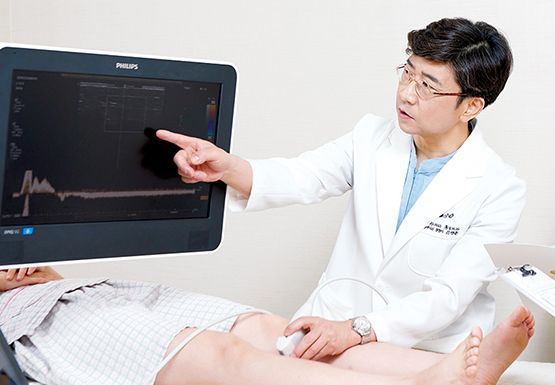
At LEDAS, this scan is done on Philips EPIQ Elite equipment, and Dr. Kim Byoung Joon explains the images with you on screen.
How is superficial thrombophlebitis treated?
Settling the acute episode
- Keep walking. Bed rest is not recommended; movement keeps blood flowing.
- Compression with stockings or a bandage, once comfortable, reduces pain and swelling.
- Warm compresses and leg elevation when resting.
- Anti-inflammatory pain relief if your doctor says it is safe for you.
- Anticoagulant medicine may be prescribed when the clot is long or close to the deep veins. This decision follows the ultrasound.
Preventing it from coming back
An episode of thrombophlebitis is often the first sign that varicose veins are causing real problems. Once the inflammation has settled, LEDAS can close the underlying refluxing veins with EVLT and duplex-guided sclerotherapy , under local anesthesia with same-day discharge. Removing the slow-flowing varicose segments reduces the chance of new clots there. Timing is set individually after a follow-up scan.
Superficial thrombophlebitis vs DVT vs cellulitis
| Superficial thrombophlebitis | Deep vein thrombosis | Cellulitis | |
|---|---|---|---|
| What it is | Clot and inflammation in a surface vein | Clot in a deep vein | Bacterial skin infection |
| Typical look | Red, hard, tender cord along a vein | Whole calf or leg swollen | Spreading red, hot patch of skin |
| Fever | Uncommon | Uncommon | Common |
| Lung risk | Low unless it extends deep | Can cause pulmonary embolism | None |
| Key test | Duplex ultrasound | Duplex ultrasound | Clinical exam, blood tests |
| Usual treatment | Walking, compression, sometimes anticoagulants | Anticoagulants | Antibiotics |
Superficial thrombophlebitis – frequently asked questions
How long does superficial thrombophlebitis last?
Pain and redness usually ease over one to three weeks. The hard lump can take longer, sometimes several months, to soften as the body absorbs the clot. Brown staining over the vein may fade slowly. If symptoms worsen instead of improving, get a repeat ultrasound.
Should I rest my leg if I have phlebitis?
No. Gentle walking is better than bed rest, because moving the calf muscles keeps blood flowing and lowers the chance of the clot spreading. Raise your leg when sitting and wear compression if advised. Avoid long periods without moving.
Can I massage a painful hard vein?
Do not massage it. Rubbing an inflamed, clotted vein can increase pain and is not recommended. Use a warm compress, keep walking and arrange an ultrasound check so the clot's position can be confirmed.
Does thrombophlebitis mean my varicose veins need treatment?
It is a strong reason to have them assessed. An episode shows that blood is stagnating in those veins. Many patients choose to treat the underlying reflux after the inflammation settles to lower the chance of repeat episodes. Your doctor will advise on timing.
About this page
Clinical information:
LEDAS Varicose Vein Clinic, led by
Dr. Kim Byoung Joon , thoracic and cardiovascular surgeon, founding member of the Korean Society for Phlebology.
Medical reviewer:
Dr. Kim Byoung Joon ·
Review status:
Pending ·
Last updated:
October 2026
This page is general information and not a diagnosis. Treatment is decided only after an in-person examination. Read our
editorial policy .
Related: DVT and varicose veins · Pulmonary embolism risk · Complications of untreated varicose veins · Why do varicose veins hurt? · When to see a vein doctor
Had a painful, hard vein? Let us check what caused it
English consultation available · +82-70-4895-5086 · kbjledaspm@gmail.com
