
Treatments · Injection therapy
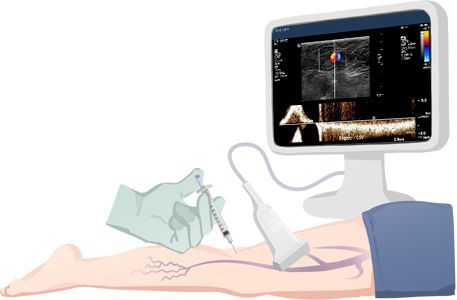
Duplex-Guided Sclerotherapy (DGS): Ultrasound-Guided Vein Injection
Quick answer: Ultrasound-guided sclerotherapy, which LEDAS calls duplex-guided sclerotherapy (DGS), injects a sclerosing medicine into refluxing veins that lie hidden beneath the skin or between muscles. The doctor watches the needle and medicine on a live ultrasound screen. Each injection takes only minutes, needs no incision, and you can walk and resume daily activity straight away.
Key facts at a glance
- Definition: DGS is sclerotherapy performed under real-time duplex ultrasound so that veins invisible from the surface can be targeted.
- Also called: ultrasound-guided sclerotherapy; when foam is used, ultrasound-guided foam sclerotherapy (UGFS).
- What it treats: hidden refluxing branches, perforator veins and veins between muscles that a laser fiber cannot follow.
- Role at LEDAS: one of three pillars of the LEDAS system, alongside EVLT and SCT; the clinic regards it as a key step in preventing recurrence.
- Time: a few minutes per injection session; you can walk immediately.
- Equipment: Philips EPIQ Elite ultrasound (4 units at LEDAS).
What is ultrasound-guided sclerotherapy?
Sclerotherapy means injecting a medicine, called a sclerosant, into a vein. The sclerosant irritates the inner lining so the vein walls stick together and close. Over the following weeks and months the body gradually absorbs the closed vein, and blood reroutes through healthy veins.
Standard sclerotherapy is done by looking at the skin, so it only works on veins you can see. Many of the veins that keep varicose disease going are deeper: branches running beneath the fat layer, connecting (perforator) veins, or segments squeezed between muscles. Duplex ultrasound shows both the vein and the direction of blood flow, so the doctor can guide the needle precisely into these hidden targets and watch the medicine spread.
Who needs duplex-guided sclerotherapy?
DGS is usually part of a combined plan rather than a stand-alone treatment. You may be a candidate if your ultrasound exam shows:
- Refluxing side branches that are too twisted or short for a laser fiber.
- Leaking perforator veins that connect the surface and deep systems.
- Residual reflux after EVLT closes the main trunk.
- New reflux found during follow-up, or recurrent varicose veins after earlier surgery.
- Advanced skin changes or ulcers, where non-surgical injection treatment is generally preferred first.
Injection therapy is also well tolerated by older patients and people with serious chronic illnesses, because it needs no general anesthesia and very little recovery.
How is DGS performed at LEDAS?
- Mapping: the leg is scanned standing up on a LEDAS-designed examination table, and each refluxing segment is marked.
- Positioning: you lie down and the ultrasound probe is placed over the target vein.
- Injection: a fine needle enters the vein under live imaging. The sclerosant, often prepared as a foam, is injected in a controlled amount.
- Confirmation: the doctor watches the medicine fill the target and checks that it stays in the intended vein.
- Compression and walking: a medical compression stocking goes on and you walk to keep blood moving in the deep veins.
Why the ultrasound matters
Without imaging, an injection into a deep vein is guesswork. With duplex guidance, the doctor can confirm the needle is inside the vein, avoid arteries and nerves, and adjust the dose to the vein's size. LEDAS uses Philips EPIQ Elite systems with large monitors, so you can watch the screen and see what is being treated.
How does DGS fit with laser treatment?
LEDAS stands for Laser, Endovenous, Duplex guided, Ablation, Sclerotherapy. In practice, the laser closes the large straight saphenous trunk, DGS deals with hidden refluxing branches, and surface sclerotherapy (SCT) fades visible spider and reticular veins. Dr. Kim Byoung Joon considers DGS a key step in reducing recurrence, because untreated hidden branches are a common reason varicose veins return. See sclerotherapy vs laser for how the two methods divide the work.
What should I expect after DGS?
You can walk out and resume normal daily activity right away. Common, temporary effects include:
- Treated veins feeling firm or lumpy, and looking darker, for some weeks. This is part of normal healing.
- Mild tenderness or bruising at the injection sites.
- Occasionally, when foam is used, a brief feeling of chest heaviness or a dry cough that settles on its own.
Walk lightly for two to four weeks, wear your stockings as instructed and attend check-ups. Read our full aftercare instructions .
Seek emergency care if you develop sudden shortness of breath, chest pain, or a painful, swollen, warm calf. These can be signs of a blood clot.
DGS vs surface sclerotherapy (SCT)
| DGS (ultrasound-guided) | SCT (surface sclerotherapy) | |
|---|---|---|
| Target veins | Hidden refluxing branches, perforators, veins between muscles | Visible spider and reticular veins |
| Guidance | Live duplex ultrasound | Direct vision of the skin |
| Usual form of medicine | Often foam | Liquid or foam, depending on vein size |
| Main goal | Remove reflux sources, help prevent recurrence | Cosmetic and symptom improvement of surface veins |
| Anesthesia | None needed beyond a fine needle | None needed |
| Back to daily activity | Immediately | Immediately |
Duplex-guided sclerotherapy – frequently asked questions
What is the difference between DGS and UGFS?
They describe the same idea from different angles. DGS (duplex-guided sclerotherapy) emphasizes the ultrasound guidance; UGFS (ultrasound-guided foam sclerotherapy) emphasizes that the medicine is foamed. At LEDAS, hidden veins are usually treated with foam under ultrasound, so the terms largely overlap. See foam sclerotherapy.
How many DGS sessions will I need?
It depends on how many refluxing branches your scan shows and how they respond. Some people need one session alongside laser treatment; others need further sessions after re-examination. LEDAS re-scans the leg after each stage, so additional injections are planned based on what the ultrasound shows rather than a fixed number.
Is ultrasound-guided sclerotherapy safe for older patients?
Generally yes. Because it needs no incision and no general or spinal anesthesia, injection therapy is usually well tolerated by older people and those with chronic illness. Your doctor will still review your medical history and medications, including any blood thinners, before treatment.
Can DGS be used instead of laser treatment?
Sometimes. For smaller or twisted refluxing veins, and for some recurrences, injection treatment alone may be enough. For a large straight saphenous trunk, laser closure is usually more suitable. The choice is made after mapping your veins, and many plans combine both methods.
Why do treated veins feel hard after DGS?
A firm, cord-like feeling means the vein has closed and is being absorbed by the body. It is part of normal healing and usually softens over weeks to months. Tell the clinic if the area becomes very red, hot or increasingly painful.
About this page
Clinical information:
LEDAS Varicose Vein Clinic, led by
Dr. Kim Byoung Joon , thoracic and cardiovascular surgeon, founding member of the Korean Society for Phlebology.
Medical reviewer:
Dr. Kim Byoung Joon ·
Review status:
Pending ·
Last updated:
October 2026
This page is general information and not a diagnosis. Treatment is decided only after an in-person examination. Read our
editorial policy .
Related: Foam sclerotherapy · Sclerotherapy · EVLT · LEDAS treatment system · Relapse prevention
Find the hidden veins behind your symptoms
English consultation available · +82-70-4895-5086 · kbjledaspm@gmail.com
