
About LEDAS · Accreditation
KAHF & GHA Accreditation for Foreign Patients
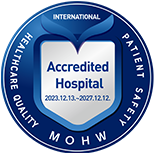
Quick answer: KAHF is the Korean government's accreditation for hospitals and clinics that serve foreign patients, run by the Ministry of Health and Welfare. LEDAS in Busan is KAHF accredited for 2019–2027 and also received GHA (Global Healthcare Accreditation) in 2023, which focuses on the medical-travel patient experience.
Key facts at a glance
- KAHF: Korean Accreditation Program for Hospitals Serving Foreign Patients, run by the Ministry of Health and Welfare.
- LEDAS KAHF periods: 2019–2021, 2021–2023 and 2023–2027.
- KAHF review: about 149 items in 2 categories — international patient services and patient safety.
- GHA: Global Healthcare Accreditation, focused on medical travel; LEDAS accredited in 2023.
- Alongside: JCI accreditation for four consecutive cycles (2015–2028).
- Patients served: people from 37 countries.
What is KAHF accreditation?
KAHF stands for the Korean Accreditation Program for Hospitals Serving Foreign Patients. It is a government program run by Korea's Ministry of Health and Welfare. While general hospital accreditation looks at care for everyone, KAHF looks specifically at what international patients need: clear communication in their language, fair and transparent information, safe care and support with practical matters.
The KAHF review at LEDAS covered about 149 items in two main categories:
- International patient services: interpretation, information in foreign languages, consent, billing transparency, complaint handling and coordination of travel and follow-up.
- Patient safety: identification, infection prevention, medication safety and emergency readiness.
How long has LEDAS been KAHF accredited?
LEDAS has been KAHF accredited continuously since 2019, across three periods: 2019–2021, 2021–2023 and the current 2023–2027. Each renewal requires a new review.
What is GHA accreditation?
GHA (Global Healthcare Accreditation) is an international program designed around medical travel. It looks at the full journey of a patient who crosses borders for care — from first enquiry and pre-travel planning, through treatment, to communication after the patient returns home. LEDAS received GHA accreditation in 2023.
Why do these accreditations matter if I am travelling for treatment?
Travelling for care brings challenges that local patients do not face. KAHF and GHA are designed to check that a clinic has thought these through. In practice that means:
- You can understand your doctor. LEDAS coordinators interpret medically in English, Russian and Chinese, with other languages arranged on request. See interpreter services .
- You know the cost in advance. The first visit (consultation and leg ultrasound) is 180,000 KRW, and treatment averages about 5,500,000 KRW per leg depending on stage. You receive an exact quote after your ultrasound. See treatment cost in Korea .
- Your journey is planned. Coordinators help with airport pick-up , accommodation and flights.
- You have a way to complain. There is a clear complaint and dispute process. See patient rights .
- You are not forgotten when you leave. Coordinators keep in touch and arrange follow-up ultrasound visits. See follow-up after returning home .
How are KAHF, GHA and JCI different?
The three accreditations overlap but have different purposes. JCI is a broad international benchmark of clinical quality and safety. KAHF is Korea's national check on services for foreign patients. GHA focuses on the medical travel experience end to end. Holding all three means LEDAS has been reviewed from three different angles.
What these accreditations do not cover
None of these programs judge whether a particular treatment is right for your legs. That decision depends on an ultrasound examination by your doctor. Accreditation also does not guarantee a result. It tells you that the clinic's systems for safety and international patient care have been independently reviewed.
How can I start as an international patient?
Begin with an online consultation or contact our International Patient Center . A coordinator will ask about your symptoms, collect any previous scans and help you plan your visit to Busan.
KAHF vs GHA vs JCI at a glance
| KAHF | GHA | JCI | |
|---|---|---|---|
| Run by | Korea Ministry of Health and Welfare | Global Healthcare Accreditation | Joint Commission International |
| Main focus | Services for foreign patients + safety | Medical travel journey | Clinical quality & patient safety |
| Scope at LEDAS | About 149 items, 2 categories | Patient journey before, during and after travel | About 1,200 items, 14 categories |
| LEDAS status | 2019–2027 (three periods) | Accredited 2023 | 4 consecutive cycles, 2015–2028 |
| What it means for you | Language, transparency and complaint handling are checked | Travel planning and follow-up are checked | Safety systems meet international standards |
KAHF and GHA accreditation – frequently asked questions
Is KAHF accreditation required to treat foreign patients in Korea?
No. Many Korean clinics treat foreign patients without KAHF. It is a voluntary government accreditation that a clinic chooses to apply for and must pass. It signals that the clinic's services for international patients, such as interpretation, information and complaint handling, have been independently reviewed.
Which languages does LEDAS support?
International coordinators interpret medically in English, Russian and Chinese. Other languages can be arranged through the coordinator or the Busan Foundation for International Cooperation. Medical statements are issued in Korean or English. Tell us your language when you book so we can prepare.
Does KAHF accreditation help with my medical visa?
Accreditation does not issue or guarantee a visa. Visa rules depend on your nationality, so check current requirements with the Korean Embassy or Consulate in your country. Our coordinators can provide documents confirming your appointment. See our guide to the medical visa for Korea.
What happens if I have a complaint as a foreign patient?
You can raise it with your English coordinator, the paper form in your room, by phone on 070-4895-5086 or online. The clinic classifies it, investigates the cause, reports to the director and replies to you. External mediation is also available. Read more about patient rights and complaints.
About this page
Clinical information:
LEDAS Varicose Vein Clinic, led by
Dr. Kim Byoung Joon , thoracic and cardiovascular surgeon, founding member of the Korean Society for Phlebology.
Medical reviewer:
Dr. Kim Byoung Joon ·
Review status:
Pending ·
Last updated:
October 2026
This page is general information and not a diagnosis. Treatment is decided only after an in-person examination. Read our
editorial policy .
Related: JCI accreditation · International patient center · Patient rights · Awards · Partner network
Plan your vein treatment in Korea with confidence
English consultation available · +82-70-4895-5086 · kbjledaspm@gmail.com
