
Conditions · Advanced vein disease
Venous Leg Ulcer Treatment in Korea
Quick answer: A venous leg ulcer is an open wound, usually near the inner ankle, caused by long-term high pressure in faulty leg veins. Dressings and compression help it close, but lasting healing depends on treating the refluxing veins behind it. At LEDAS in Busan, ultrasound-guided sclerotherapy is generally the first approach once skin damage has developed.
Key facts at a glance
- What it is: a chronic wound caused by venous hypertension (persistently high pressure in leg veins).
- Typical location: the inside of the lower leg, just above the ankle (the "gaiter" area).
- Disease stage: ulceration is the most advanced stage (C5 healed, C6 active) of chronic venous disease.
- Warning signs before an ulcer: ankle swelling, brown skin, itching, hard or tight skin.
- Core of treatment: wound care + compression + treating the underlying reflux.
- LEDAS approach: ultrasound mapping, then ultrasound-guided foam sclerotherapy first, with laser added when suitable; local anesthesia only.
What is a venous leg ulcer?
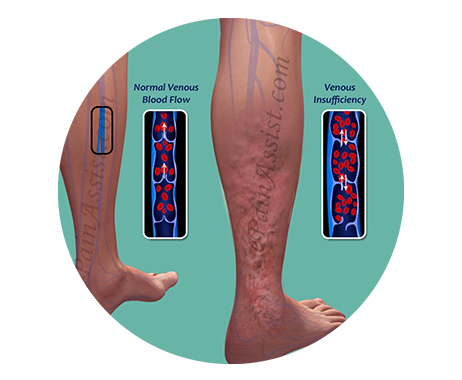
A venous leg ulcer is a break in the skin of the lower leg that does not heal in the normal two to three weeks. It forms because blood is not draining properly out of the leg. Valves inside the veins are supposed to keep blood moving upward toward the heart. When they fail, blood falls back down and pools. This is called venous reflux , and the result is constant high pressure in the veins around the ankle.
Over months and years, that pressure pushes fluid and blood components into the surrounding tissue. The skin becomes swollen, darkened, inflamed and fragile. Eventually a small scratch or knock, or sometimes nothing at all, opens a wound that the damaged skin cannot repair.
How do varicose veins lead to an ulcer?
Ulcers are the end point of chronic venous insufficiency . LEDAS describes varicose vein disease as progressive, moving roughly through these stages (see varicose vein stages ):
- Spider veins (telangiectasia)
- Varicose veins
- Swelling (edema)
- Skin discoloration
- Severe discoloration and a healed ulcer
- An active, progressive ulcer
Not everyone passes through every stage, and progression is often slow. But varicose veins do not go away by themselves, and each step makes treatment more involved. Many people with ulcers had bulging veins or swollen ankles for years before the skin broke down.
What does a venous ulcer look like?
- A shallow wound with irregular edges, usually above the inner ankle
- A red or yellowish base, often with fluid leaking from it
- Surrounding skin that is brown, hardened, shiny or eczema-like and itchy
- Swelling of the ankle and lower leg
- Aching that improves when the leg is raised
Not every leg wound is venous. Ulcers on the foot or toes, very painful wounds, or wounds in people with diabetes or poor pulses may have an arterial cause. Using compression on an arterial ulcer can be harmful, which is why proper assessment comes first. Seek urgent care if the leg becomes hot, red and spreading, you develop a fever, or the wound smells and worsens quickly; these can be signs of infection.
How are venous leg ulcers treated?
1. Care for the wound
Regular cleaning, suitable dressings and management of the skin around the wound. This is often done with a local doctor or wound nurse, especially for patients who live abroad.
2. Compression
Graduated compression, from bandages or medical compression stockings , counteracts the high vein pressure and reduces swelling. It is an important support, but on its own it does not fix the leaking veins.
3. Treat the source of the reflux
This is the step that aims to stop the ulcer coming back. Once necrosis or ulceration has developed, open surgery becomes more difficult, so LEDAS recommends non-surgical treatment first: ultrasound-guided foam sclerotherapy . A sclerosing foam is injected under ultrasound into the refluxing veins, including those running beneath the damaged skin, without cutting through it. Where a large saphenous vein is the main source and the skin allows, EVLT may be added. Everything is done under local anesthesia, with no incision and same-day discharge.
How does LEDAS plan ulcer treatment?
Your first visit includes a full duplex ultrasound on Philips EPIQ Elite equipment. Dr. Kim Byoung Joon maps which veins are refluxing, how far the reflux extends, and whether perforator veins near the wound are involved. The plan may involve several injection sessions, each followed by an ultrasound re-check. After healing, follow-up every one to two years, or on each visit to Korea for overseas patients, helps catch new reflux early under the relapse prevention program .
The first visit costs 180,000 KRW, including consultation and leg ultrasound. Treatment costs depend on the stage and extent of disease, so an exact quote is given after the ultrasound.
The three parts of venous ulcer care
| Wound care | Compression | Vein treatment | |
|---|---|---|---|
| Goal | Keep the wound clean and protected | Lower pressure and swelling | Stop the reflux that caused the ulcer |
| How | Cleaning and dressings | Bandages or medical stockings | Ultrasound-guided foam sclerotherapy, EVLT when suitable |
| Who | Doctor or wound nurse, can be local | Fitted after arterial circulation is checked | Vein specialist after duplex ultrasound |
| Fixes the cause? | No | No, supportive | Yes, targets the source |
Venous leg ulcers – frequently asked questions
Why won't my leg ulcer heal?
Most venous ulcers stay open because the high vein pressure that caused them is still there. Dressings protect the wound, but the skin keeps being damaged from below. Treating the refluxing veins, together with compression, gives the skin a better chance to close. Infection or arterial disease can also slow healing.
Can you treat varicose veins while the ulcer is still open?
Often, yes. Ultrasound-guided foam sclerotherapy can reach refluxing veins through small needle punctures in healthier skin, without cutting through the damaged area. Your doctor decides timing after the ultrasound. Treating the source early may help the ulcer heal rather than waiting for it to close first.
Will my ulcer come back after treatment?
It can, because chronic venous disease can produce new reflux over time. Daily compression, staying active, skin care and regular follow-up ultrasound lower the chance. LEDAS includes long-term monitoring through its relapse prevention program, with checks every one to two years.
I live abroad. Who looks after my wound after I fly home?
Usually a local doctor or wound nurse continues dressings, while LEDAS manages the vein treatment and follow-up. Our coordinator stays in touch after you return and can help you share updates with Dr. Kim. Read follow-up after you return home.
About this page
Clinical information:
LEDAS Varicose Vein Clinic, led by
Dr. Kim Byoung Joon , thoracic and cardiovascular surgeon, founding member of the Korean Society for Phlebology.
Medical reviewer:
Dr. Kim Byoung Joon ·
Review status:
Pending ·
Last updated:
October 2026
This page is general information and not a diagnosis. Treatment is decided only after an in-person examination. Read our
editorial policy .
Related: Skin darkening and lipodermatosclerosis · Chronic venous insufficiency · Leg and ankle swelling · Ultrasound-guided foam sclerotherapy · Varicose vein stages
Treat the veins behind your leg ulcer
English consultation available · +82-70-4895-5086 · kbjledaspm@gmail.com
