
Diagnosis · Ultrasound
Venous Duplex Ultrasound Exam for Varicose Veins
Quick answer: A venous duplex ultrasound combines a picture of your leg veins with a color map of blood flow, showing which veins are leaking and how far the reflux extends. It is non-invasive, uses no radiation or contrast, and is painless. At LEDAS in Busan it takes about 15–20 minutes on Philips EPIQ Elite equipment, with results explained live.
Key facts at a glance
- "Duplex" means two modes: B-mode (grayscale image of the vein) plus Doppler (direction and speed of blood flow).
- What it shows: vein size and shape, flow direction, flow velocity and valve function.
- Safety: non-invasive, no contrast, no radiation.
- Duration at LEDAS: about 15–20 minutes, with real-time interpretation.
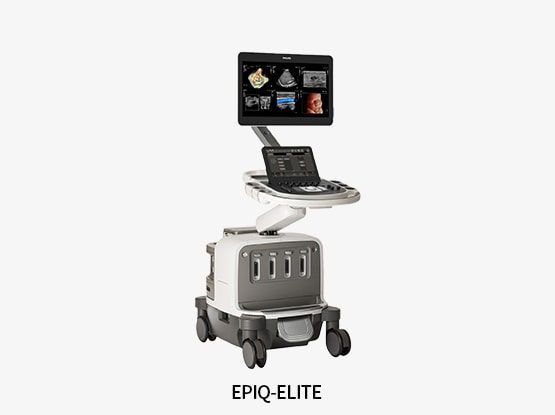
- Equipment: 4 units of Philips EPIQ Elite premium vascular ultrasound with large monitors.
- Position: mainly standing, on an examination table LEDAS designed for standing-position vein scans.
- Used three times: before treatment (diagnosis), during it (guidance) and after it (follow-up).
What is a venous duplex ultrasound?
A duplex ultrasound uses high-frequency sound waves to look inside your legs. A small handheld probe is moved over the skin with gel, and the machine builds an image from returning echoes. It works in two ways at once, hence "duplex":
- B-mode imaging shows the vein's structure: its size, its walls, whether it is twisted, and whether there is any clot inside.
- Doppler measures blood movement. On screen, color shows which direction blood is flowing and how fast. A trace shows how long any backward flow lasts.
LEDAS describes vascular ultrasound as the most accurate way to diagnose blood vessels for varicose vein care. It needs no needles, no contrast dye and no radiation, so it can be repeated as often as necessary.
Why is ultrasound so important for varicose veins?
What you see on the skin is usually the end of the problem, not the start. Bulging branches are fed by leaking valves higher up, often in the great or small saphenous vein, or in perforator veins hidden in the muscle. Treating only what is visible tends to fail.
Dr. Kim Byoung Joon links many recurrences to incomplete diagnosis : if every affected vessel is not mapped accurately, treatment is incomplete and veins return. Accuracy depends on two things: the experience of the person scanning, and the quality of the equipment. That is why every LEDAS treatment plan starts here. Read why varicose veins come back .
What happens during the exam at LEDAS?
- Preparation. You change into shorts in a changing room. No fasting or special preparation is needed.
- A quick guide to the screen. Before scanning, staff show you how to read the monitor, so you can follow along.
- Standing scan. You stand on a table designed by LEDAS for standing-position vein exams. Standing matters: gravity makes leaking valves show their reflux clearly.
- Provocation tests. The doctor may squeeze your calf or ask you to bear down briefly. When the squeeze is released, healthy valves snap shut; leaking ones let blood fall back. See venous reflux testing explained .
- Deep veins too. The deep veins are checked for normal flow and any signs of a current or old clot.
- Live explanation. Dr. Kim Byoung Joon explains findings in real time on the large monitor. The whole exam takes about 15–20 minutes.
What does the ultrasound tell you?
- Whether venous reflux is present, and in which veins
- How far the reflux extends, from its starting point down the leg
- Vein diameters, which affect the treatment choice
- Perforator veins that may be leaking
- Whether the deep veins are healthy, which is essential before closing surface veins
- Any clot, past or present
This map becomes the basis for your treatment plan : which veins to close with EVLT , which with duplex-guided sclerotherapy , and which need no treatment at all.
Is ultrasound used after diagnosis too?
Yes, at three stages. During treatment it guides the laser fiber and injections to the exact spot. Immediately afterward it confirms the vein is closed. In the long term, the LEDAS follow-up program repeats the scan every one to two years, or whenever an overseas patient visits Korea, to catch new reflux early.
How much does the exam cost?
At LEDAS the first visit, including specialist consultation and leg ultrasound, costs 180,000 KRW. Any treatment quote is given after the scan, because cost depends on what it finds. Korean National Health Insurance holders should check coverage with the international coordinator. See first visit and ultrasound fee .
Duplex ultrasound vs other ways to check leg veins
| Duplex ultrasound | Visual exam only | CT or MR venography | |
|---|---|---|---|
| Shows reflux direction and duration | Yes, in real time | No | Limited |
| Finds hidden veins | Yes | No | Yes |
| Radiation or contrast | None | None | Often contrast; CT uses radiation |
| Standing position | Yes | Yes | Usually lying down |
| Typical use | Standard test for varicose veins | First impression only | Complex pelvic or malformation cases |
Venous duplex ultrasound – frequently asked questions
Does a venous duplex ultrasound hurt?
No. You feel only the probe and cool gel moving on your skin, plus a brief firm squeeze of the calf during reflux testing. There are no needles. If standing for 15–20 minutes is hard for you, tell the staff so they can support you.
How should I prepare for a leg vein ultrasound?
No fasting is needed. Wear clothes that let you easily change into shorts, and avoid applying lotion to your legs that day. Bring any previous scan reports and a list of medicines. See what to wear and bring.
Why do I have to stand for the scan?
Reflux happens when gravity pulls blood back down through a leaking valve. Lying flat removes much of that pull, so leaks can be missed. Standing shows the veins as they behave in daily life, which gives a more accurate map.
Can I bring an ultrasound report from another clinic instead?
Previous reports are very useful for comparison, so please bring them. LEDAS still performs its own scan before treatment, because the plan depends on a detailed, current map of every refluxing segment, and veins can change over time.
About this page
Clinical information:
LEDAS Varicose Vein Clinic, led by
Dr. Kim Byoung Joon , thoracic and cardiovascular surgeon, founding member of the Korean Society for Phlebology.
Medical reviewer:
Dr. Kim Byoung Joon ·
Review status:
Pending ·
Last updated:
October 2026
This page is general information and not a diagnosis. Treatment is decided only after an in-person examination. Read our
editorial policy .
Related: Venous reflux testing · Philips EPIQ Elite ultrasound · Your first visit · How your treatment plan is built · First visit fee
See your own veins on screen in 20 minutes
English consultation available · +82-70-4895-5086 · kbjledaspm@gmail.com
