
Conditions · Complications
Deep Vein Thrombosis (DVT) and Varicose Veins
Quick answer: Varicose veins are surface veins, while deep vein thrombosis (DVT) is a blood clot in a deep vein, usually in the leg. Varicose veins do not always lead to DVT, but long-standing vein disease slows blood flow and is linked to a higher DVT risk. Sudden one-sided leg swelling and pain needs urgent medical assessment.
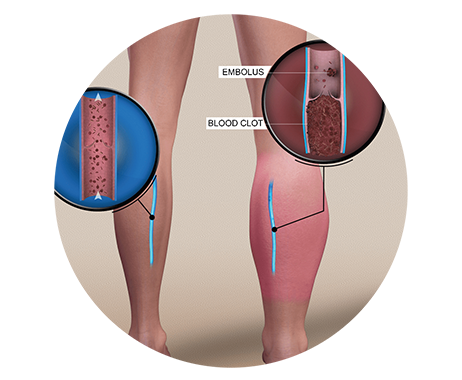
Key facts at a glance
- DVT definition: a blood clot that partly or fully blocks a deep vein, most often in the calf or thigh.
- Why legs: leg veins are farthest from the heart, and blood pools there when the calf muscles are inactive.
- Typical pattern: usually affects one leg, with swelling, pain, warmth and red or bluish skin.
- Main danger: part of the clot can travel to the lungs and cause a pulmonary embolism .
- Link to varicose veins: worsening chronic venous disease is one listed risk factor, alongside immobility, inherited factors and oral contraceptives.
- Emergency: chest pain or sudden breathlessness means call emergency services (119 in Korea) immediately.
What is deep vein thrombosis?
Your legs have two vein systems. The superficial veins lie just under the skin; these are the veins that become varicose veins . The deep veins run inside the muscles and carry most of the blood back to the heart. Deep vein thrombosis (DVT) is a blood clot (thrombus) that forms inside one of these deep veins.
A DVT can block blood from leaving the leg, causing swelling and pain. The bigger danger is that a piece of clot can break off, travel through the heart and lodge in the lungs. This is a pulmonary embolism, a medical emergency.
Can varicose veins cause DVT?
Having varicose veins does not mean you will get a DVT. However, the two conditions are connected. In varicose veins, faulty valves let blood flow backward and pool in the leg. Slow, stagnant blood is one of the classic conditions for clot formation. As chronic venous disease progresses, the risk of clotting rises.
Clots can also start in a varicose vein itself. This is called superficial thrombophlebitis . It is usually less dangerous than DVT, but a clot near the point where a surface vein joins the deep system can extend into the deep vein. That is why a painful, hard, red varicose vein should be checked with ultrasound rather than ignored.
Other risk factors for DVT
- Long periods without moving: bed rest, hospital stays, long-haul flights or car journeys
- Inherited (congenital) clotting tendencies or a family history of clots
- Oral contraceptives or other hormone treatments
- Pregnancy and the weeks after childbirth
- Recent surgery or leg injury
- Cancer, older age and obesity
What are the symptoms of DVT?
DVT usually affects one leg. Watch for:
- Swelling of the calf, ankle or whole leg, often sudden
- Pain, tenderness or a cramping ache, especially when walking or flexing the foot
- Warmth along the vein, or the leg feeling warmer than the rest of the body
- Red or bluish skin
- Swelling that leaves a dent when pressed and does not spring back quickly
- Surface veins that look more prominent than usual
Some DVTs cause no symptoms. A clot may only be found when it causes a pulmonary embolism.
What should I do if I think I have a DVT?
- Get assessed the same day. Go to an emergency department or urgent care. A duplex ultrasound is the standard test to confirm or rule out DVT.
- Do not massage the leg.
- Call emergency services immediately (119 in Korea, or your local number) if you also have chest pain, sudden shortness of breath, a racing heart, coughing blood or feel faint.
DVT is treated with anticoagulant (blood-thinning) medicine prescribed by a doctor. LEDAS is an outpatient varicose vein clinic, not an emergency department. If you have acute DVT symptoms, please do not wait for a clinic appointment.
How does LEDAS help lower DVT risk from varicose veins?
At LEDAS, every patient has a duplex ultrasound on Philips EPIQ Elite equipment that checks both the superficial and deep veins. If an old or current clot is found, treatment of the varicose veins is planned around it.
When the varicose veins themselves are treated, the aim is to remove the pooling that drives symptoms and progression. LEDAS uses EVLT and duplex-guided sclerotherapy under local anesthesia only. Because there is no general or spinal anesthesia, patients start walking right after the procedure, which helps keep blood moving. Walking practice and compression stocking training are part of every treatment day, and patients are monitored before discharge.
How can I prevent DVT day to day?
- Walk regularly and avoid sitting or standing still for hours
- On flights, flex your ankles, walk the aisle and drink water; see long-haul flights and DVT prevention
- Wear medical compression stockings if your doctor recommends them
- Tell your doctor about past clots before any surgery or hormone treatment
Varicose veins vs superficial clot vs DVT
| Varicose veins | Superficial thrombophlebitis | Deep vein thrombosis | |
|---|---|---|---|
| Where | Surface veins | Clot in a surface vein | Clot in a deep vein inside the muscle |
| Typical signs | Bulging veins, heaviness, ankle swelling | Hard, red, tender cord along a vein | One-sided leg swelling, pain, warmth |
| Onset | Gradual, over years | Over hours to days | Often sudden |
| Lung risk | Indirect | Low, unless it extends to a deep vein | Can cause pulmonary embolism |
| What to do | Book an ultrasound consultation | See a doctor within a day or two for ultrasound | Urgent same-day medical care |
DVT and varicose veins – frequently asked questions
Do varicose veins mean I will get a blood clot?
No. Most people with varicose veins never develop a DVT. However, untreated vein disease causes blood to pool, and that is linked to a higher clot risk over time. An ultrasound check tells you how your veins are working now and whether any clot is present.
Can I have varicose vein treatment if I had a DVT before?
Often, yes, but it needs careful planning. The ultrasound must confirm that the deep veins have recovered enough to drain the leg before surface veins are closed. Tell your doctor about any past clot and any blood-thinning medicine; see blood thinners and vein treatment.
How is DVT diagnosed?
DVT is usually diagnosed with a duplex ultrasound, which shows whether a deep vein compresses normally and whether blood flows through it. A blood test called D-dimer is sometimes used alongside it in hospitals. If you have sudden one-sided leg swelling, go for urgent assessment rather than waiting.
Does vein treatment itself carry a DVT risk?
Any vein procedure carries a small risk of clotting, which is why careful technique and early walking matter. At LEDAS, treatment uses local anesthesia only, so you walk straight afterward, and compression stockings and monitoring are part of the day. Read more about side effects and risks.
About this page
Clinical information:
LEDAS Varicose Vein Clinic, led by
Dr. Kim Byoung Joon , thoracic and cardiovascular surgeon, founding member of the Korean Society for Phlebology.
Medical reviewer:
Dr. Kim Byoung Joon ·
Review status:
Pending ·
Last updated:
October 2026
This page is general information and not a diagnosis. Treatment is decided only after an in-person examination. Read our
editorial policy .
Related: Pulmonary embolism risk · Superficial thrombophlebitis · Complications of untreated varicose veins · Long flights and DVT · Are varicose veins dangerous?
Check your deep and surface veins with one ultrasound
English consultation available · +82-70-4895-5086 · kbjledaspm@gmail.com
