
Varicose Vein FAQ · Symptoms
Why Do Varicose Veins Hurt?
Quick answer: Varicose veins hurt because leaking valves let blood pool in the leg, raising the pressure inside the veins. The stretched vein walls and the fluid that seeps into surrounding tissue cause aching, heaviness, throbbing and cramps, which usually worsen after standing and ease when you raise your legs. Sudden severe pain in one leg needs urgent medical care.
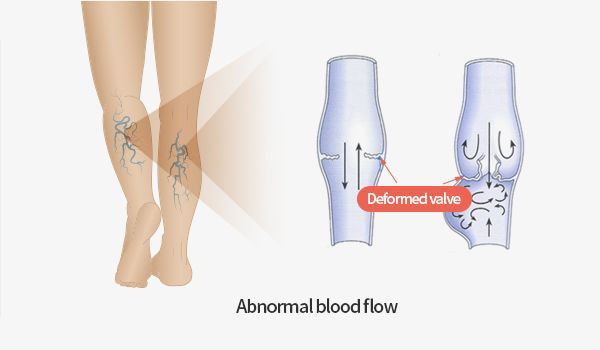
Key facts at a glance
- Root cause: venous reflux – faulty valves let blood flow backwards and pool in the legs.
- Pain mechanism: raised venous pressure stretches vein walls and pushes fluid into tissues, causing inflammation.
- Typical feelings: aching, pulling, throbbing, heaviness, a "bursting" calf, night cramps, itching.
- Pattern: worse at the end of the day, after standing, in heat; better with walking and leg elevation.
- Size isn't everything: small or hidden veins can hurt as much as large bulging ones.
- Red flag: sudden, severe one-leg pain and swelling may be a clot – seek emergency care.
What is happening inside a painful vein?
Your leg veins carry blood uphill back to the heart. They rely on two things: one-way valves that stop blood falling back down, and the calf muscle pump , which squeezes the veins every time you walk.
When valves fail, blood leaks backwards and collects in the lower leg. This is called venous reflux . The trapped blood raises pressure in the veins (venous hypertension). Over time this:
- Stretches the vein wall , which contains nerve endings that sense pressure and stretch.
- Pushes fluid out of small vessels into the surrounding tissue, causing swelling and a tight, heavy feeling.
- Triggers inflammation in the vein wall and skin, which makes tissues tender and itchy.
- Reduces oxygen delivery to the skin and muscle, contributing to fatigue and cramps.
Learn more in what causes varicose veins and chronic venous insufficiency .
What does varicose vein pain feel like?
People describe it in many ways. You may notice one or several of these:
- Aching or pulling along the vein or deep in the calf.
- Heaviness , as though your legs are filled with sand, or a "bursting" feeling in the calves.
- Throbbing or burning over a bulging vein.
- Night cramps that wake you. See night leg cramps and vein disease .
- Itching around the ankles, often with dry skin.
- Restless legs in the evening.
Why is the pain worse at certain times?
End of the day
The longer you stand or sit, the more blood pools. Many people feel fine in the morning and have heavy, tired legs by evening.
Heat
Hot weather, saunas and hot baths widen veins, so more blood collects. Pain and swelling often increase in summer.
Hormones
Some women notice more pain before periods or during pregnancy, because hormones relax vein walls.
Why walking and elevation help
Walking activates the calf pump and moves blood upward. Raising your legs above heart level lets gravity drain the veins. If these give relief, venous disease is a likely cause.
Do bigger veins hurt more?
Not necessarily. Pain does not always match how the veins look. Some people with large bulging veins have little discomfort, while others with no visible veins have significant aching because the reflux is in veins hidden between the muscles. This is why LEDAS stresses that many symptoms of varicose veins are invisible, and why a duplex ultrasound is the key test.
When is leg pain a sign of something serious?
Seek emergency care immediately if you have:
- Sudden swelling, pain, warmth or redness in one leg – possible deep vein thrombosis .
- Chest pain or sudden shortness of breath – possible pulmonary embolism .
See a doctor soon for a hard, red, tender cord along a vein (superficial thrombophlebitis), a wound near the ankle that will not heal, or bleeding from a varicose vein. Leg pain when walking that eases on rest can also come from narrowed arteries rather than veins, which needs a different assessment.
How is varicose vein pain treated?
Compression stockings, walking and leg elevation can ease symptoms, but they do not repair the leaking valves. Treating the refluxing veins removes the source of the pressure. At LEDAS this means EVLT for main leaking veins and ultrasound-guided sclerotherapy for smaller and hidden veins, under local anesthesia with same-day discharge. Many patients report that heaviness and aching ease as the treated veins close.
Types of leg pain and what they may mean
| What you feel | Likely cause | What to do |
|---|---|---|
| Dull ache and heaviness by evening, eases with leg-raising | Venous reflux / varicose veins | Book a vein ultrasound |
| Night cramps with swollen ankles | Often linked to venous disease | Book a vein ultrasound |
| Hard, red, tender cord along a surface vein | Superficial thrombophlebitis | See a doctor within days |
| Sudden one-leg swelling, pain and warmth | Possible deep vein thrombosis | Emergency care now |
| Chest pain or sudden breathlessness | Possible pulmonary embolism | Call emergency services |
| Calf pain on walking, eases with rest | Possible arterial disease | See a doctor for arterial checks |
Varicose vein pain – frequently asked questions
Why do my varicose veins hurt more at night?
Blood has pooled in your legs all day, so pressure and swelling peak by evening. When you lie down, cramps and restlessness can become more noticeable. Raising your legs, walking during the day and wearing stockings often help, but a scan can show whether reflux is driving it.
Can varicose veins hurt without being visible?
Yes. Reflux can occur in veins deep under the skin or between muscles, causing aching, heaviness and cramps with no bulging veins on the surface. A duplex ultrasound can find these hidden leaks. Try the self-check checklist to review your symptoms.
What painkiller is best for varicose vein pain?
Simple painkillers may ease discomfort for a short time, but they do not treat the cause and are not a long-term solution. Ask a doctor or pharmacist which is suitable, especially if you take blood thinners. Compression, movement and treating the leaking veins address the underlying pressure.
Does the pain go away after treatment?
For many people, aching and heaviness ease as treated veins close, often within weeks. A pulling sensation along the treated vein for 1–2 weeks after laser is normal. Results vary between individuals. See results: what to expect.
About this page
Clinical information:
LEDAS Varicose Vein Clinic, led by
Dr. Kim Byoung Joon , thoracic and cardiovascular surgeon, founding member of the Korean Society for Phlebology.
Medical reviewer:
Dr. Kim Byoung Joon ·
Review status:
Pending ·
Last updated:
October 2026
This page is general information and not a diagnosis. Treatment is decided only after an in-person examination. Read our
editorial policy .
Related: Symptoms & warning signs · Heavy, tired legs · Night leg cramps · Leg swelling · Is treatment painful?
Find the source of your leg pain
English consultation available · +82-70-4895-5086 · kbjledaspm@gmail.com
