
Treatments · Safety
EVLT Side Effects and Risks of Vein Treatment
Quick answer: The common side effects of EVLT are mild and temporary: a pulling or tight feeling along the treated vein for one to two weeks, bruising, and tenderness. Less common effects include skin staining, temporary numbness and superficial vein inflammation. Serious complications such as deep vein thrombosis are uncommon but possible, so you should know the warning signs before treatment.
Key facts at a glance
- Common after laser: pulling pain for 1–2 weeks, bruising, tenderness.
- Common after injections: firm, darker veins as part of healing; brief chest heaviness or dry cough after foam.
- Less common: brown skin staining, temporary numbness or tingling, superficial thrombophlebitis, matting (fine new red vessels).
- Uncommon but serious: deep vein thrombosis (DVT) and pulmonary embolism (PE).
- Risk reduction at LEDAS: ultrasound guidance throughout, local anesthesia only, early walking, compression, JCI-accredited safety systems.
- Emergency signs: sudden breathlessness, chest pain, coughing blood → call emergency services.
Every medical treatment carries some risk. Knowing what is normal, what is uncommon and what needs urgent attention helps you make an informed decision and recover with confidence. This page covers EVLT and the sclerotherapy techniques used at LEDAS.
What are the common side effects of EVLT?
Pulling or tight sensation
As the closed vein shrinks, many people feel a cord-like tightness along the inner thigh or calf, often most noticeable around days four to seven. It usually settles within one to two weeks. Walking and gentle ankle exercises help.
Bruising and tenderness
Bruising along the treated vein and at the anesthetic injection sites is common. It changes color and fades over two to three weeks. The 1940nm laser used at LEDAS is strongly absorbed by water in the vein wall, which is intended to keep heat concentrated and limit bruising, but some bruising is still normal.
Mild swelling
Slight ankle swelling, especially in the evening, can occur in the first weeks. Compression stockings and raising your legs help.
What side effects can sclerotherapy cause?
- Firm, dark veins: injected veins often harden and darken as they close; this is part of normal healing.
- Skin staining: brownish lines along treated veins can take months to fade.
- Matting: a blush of tiny new red vessels near an injection site, which may need further treatment.
- Brief chest heaviness, dry cough or visual flicker soon after foam injection, which usually passes quickly.
- Rarely, skin injury at the injection site.
See foam sclerotherapy and sclerotherapy for more on these treatments.
What are the less common and serious risks?
Nerve irritation
Small skin nerves lie close to some leg veins, especially below the knee. Heat or swelling can irritate them, causing temporary numbness or tingling. This usually improves over weeks to months.
Superficial thrombophlebitis
A treated or nearby surface vein can become inflamed, red and tender. It is usually managed with walking, compression and anti-inflammatory measures. See superficial thrombophlebitis .
Deep vein thrombosis and pulmonary embolism
Rarely, a clot can form in a deep vein ( DVT ). If a piece travels to the lungs, it causes a pulmonary embolism, which is a medical emergency. Early walking, compression and careful technique are key preventive measures.
Infection and allergic reactions
Because there is no surgical wound, infection is uncommon. Allergic reactions to local anesthetic or sclerosant are rare; tell the team about any previous reactions.
How does LEDAS reduce the risks?
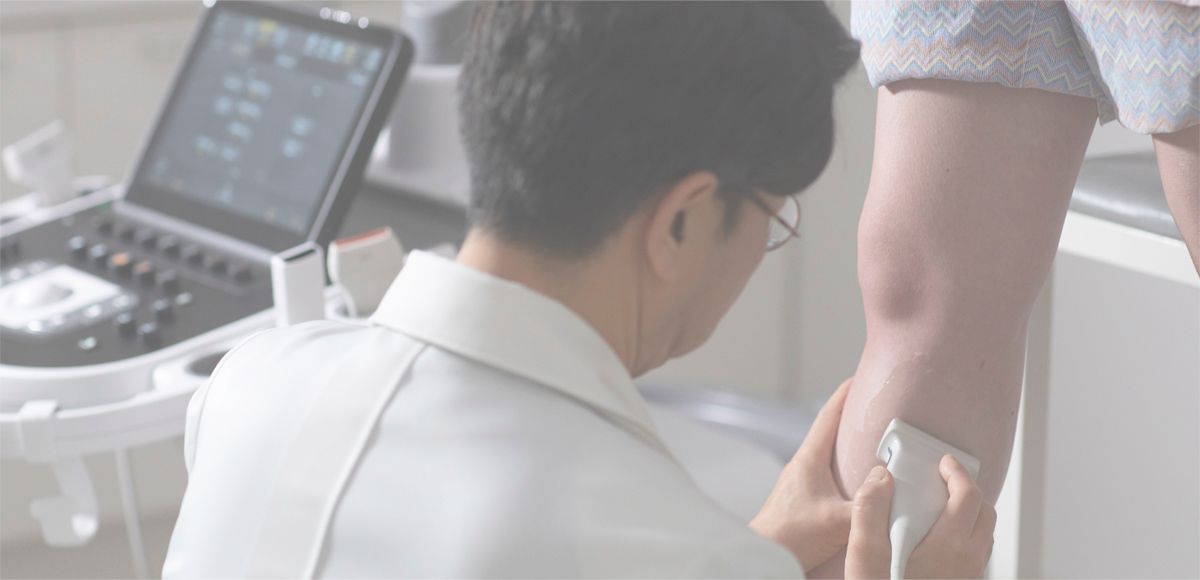
- Accurate diagnosis with Philips EPIQ Elite ultrasound, so only the right veins are treated.
- Ultrasound guidance during treatment to position the fiber and needle precisely and keep foam out of deep veins.
- Local anesthesia only , avoiding the risks of general or spinal anesthesia, plus a protective fluid layer around the vein during laser treatment.
- Pre-treatment checks including an ECG and a review of your medications, such as blood thinners .
- Early walking and compression , taught before you leave.
- Safety systems under JCI accreditation, including a staff team trained in CPR, an AED on site, a physician with ACLS certification and a 6-stage infection control system. See patient safety and infection control .
When should I seek help?
Call emergency services for sudden shortness of breath, chest pain, coughing blood, fainting, or sudden weakness, numbness or difficulty speaking.
Seek urgent medical care for a calf or thigh that becomes swollen, hot and painful, especially on one side.
Contact LEDAS (+82-70-4895-5086) for worsening pain, spreading redness, fever, or numbness that does not improve. Our aftercare instructions list what is normal during healing.
Side effects: what is normal and what is not
| Symptom | How common | What to do |
|---|---|---|
| Pulling pain along the vein | Common, 1–2 weeks | Walk, ankle exercises, stockings |
| Bruising | Common, 2–3 weeks | No action needed |
| Firm, dark injected veins | Common | Normal healing; mention at check-up |
| Skin staining or matting | Less common | Usually fades; further treatment possible |
| Numbness or tingling | Less common | Report to the clinic; usually improves |
| Swollen, hot, painful calf | Uncommon | Seek urgent medical care |
| Sudden breathlessness or chest pain | Rare | Call emergency services |
Side effects and risks – frequently asked questions
How long do EVLT side effects last?
Most common effects are short-lived: the pulling sensation usually settles in one to two weeks and bruising in two to three weeks. Skin staining after injections can take several months to fade. Anything that worsens instead of improving should be checked by the clinic.
Can EVLT damage nerves?
Temporary numbness or tingling can occur when small skin nerves lie close to the treated vein, most often below the knee. It usually improves over weeks to months. Ultrasound guidance and a protective fluid layer of local anesthetic around the vein are used to lower this risk.
Is a blood clot after vein treatment common?
No, deep vein thrombosis after EVLT or sclerotherapy is uncommon. Your risk is reduced by walking soon after treatment, wearing compression and moving regularly during travel. Know the signs, a swollen, hot, painful calf or sudden breathlessness, and seek urgent care if they appear.
Who has a higher risk of complications?
People with a previous blood clot, clotting disorders, recent surgery, pregnancy, limited mobility, or who take hormone treatment may have higher risk. Tell your doctor about your full history so the plan can be adjusted. See is laser vein treatment safe?
About this page
Clinical information:
LEDAS Varicose Vein Clinic, led by
Dr. Kim Byoung Joon , thoracic and cardiovascular surgeon, founding member of the Korean Society for Phlebology.
Medical reviewer:
Dr. Kim Byoung Joon ·
Review status:
Pending ·
Last updated:
October 2026
This page is general information and not a diagnosis. Treatment is decided only after an in-person examination. Read our
editorial policy .
Related: Is laser treatment safe? · Aftercare · Recovery timeline · Patient safety · JCI accreditation
Ask our doctor about your personal risk
English consultation available · +82-70-4895-5086 · kbjledaspm@gmail.com
