
Varicose Vein FAQ · Safety
Is Laser Vein Treatment (EVLT) Safe?
Quick answer: Endovenous laser treatment is a well-established, minimally invasive procedure with a low rate of serious complications when it follows a careful ultrasound diagnosis. Common effects are bruising and a pulling feeling for one to two weeks. At LEDAS in Busan, EVLT is done under ultrasound guidance with local anesthesia only, in a JCI-accredited clinic, with same-day discharge.
Key facts at a glance
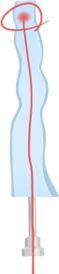
- EVLT: endovenous laser treatment closes a leaking vein from the inside using laser heat delivered through a thin fiber.
- Anesthesia: local only at LEDAS; no general or spinal anesthesia.
- Guidance: every step is watched on duplex ultrasound (Philips EPIQ Elite at LEDAS).
- Laser at LEDAS: 1940nm diode laser (Diotech), a wavelength strongly absorbed by water.
- Common, temporary effects: bruising, tenderness, a pulling sensation for 1–2 weeks.
- Uncommon but important risks: skin burn, nerve irritation, blood clot extension (EHIT) or deep vein thrombosis.
- Safety standards: LEDAS holds JCI accreditation for four consecutive cycles (2015–2028).
What makes laser vein treatment low-risk?
EVLT has been used worldwide for many years and is now a standard treatment for leaking saphenous veins. Compared with traditional stripping surgery, it avoids several sources of risk at once:
- No incision: the vein is reached through a needle puncture, so there is no surgical wound to become infected.
- No general anesthesia: local anesthesia avoids the risks of being put to sleep. You stay awake and can talk to the team.
- The vein is not pulled out: it is sealed and absorbed, which avoids the tearing and bleeding of stripping.
- You walk straight away: early walking keeps blood moving and lowers clot risk.
What are the possible side effects?
No procedure is risk-free. Being clear about what can happen helps you make an informed choice.
Common and expected
- Bruising along the treated vein.
- Tenderness and a pulling or tight feeling for 1–2 weeks as the vein seals.
- A firm, cord-like feeling under the skin while the vein is absorbed.
Less common
- Nerve irritation: numbness or tingling near the treated vein, which usually improves with time.
- Skin burn or pigmentation: rare when the vein is properly separated from the skin with fluid.
- Superficial thrombophlebitis: a tender, inflamed surface vein. See superficial thrombophlebitis .
Rare but serious
- Deep vein thrombosis (DVT) or extension of the clot from the treated vein into a deep vein (called EHIT). Ultrasound follow-up is used to check for this.
- Pulmonary embolism , when a clot travels to the lungs. This is rare but is why warning signs must never be ignored.
See our full page on side effects and risks of vein treatment .
How does LEDAS reduce the risks?
- Accurate mapping first: a standing duplex ultrasound shows exactly which veins leak and where they join the deep system. LEDAS uses four Philips EPIQ Elite units for diagnosis and treatment guidance.
- Ultrasound-guided procedure: the fiber tip position is watched in real time, so energy is delivered only where intended.
- Tumescent local anesthesia: fluid placed around the vein numbs the area and protects nearby skin and nerves from heat.
- 1940nm laser: this wavelength is strongly absorbed by water in the vein wall, which helps keep heat close to the target. Read 1940nm vs 980nm/1470nm laser .
- Walking and stockings: you walk right after treatment and wear medical compression stockings .
- Follow-up ultrasound: scans after treatment check that the vein has closed and that no clot has formed.
- Clinic safety systems: an AED with CPR-trained staff, an ACLS-certified physician, backup power and a 6-stage infection control system. See patient safety .
Who may not be suitable for EVLT?
Laser treatment may be delayed or replaced by another option if you:
- Are pregnant (see treatment while pregnant ).
- Have an active deep vein thrombosis.
- Cannot walk enough after treatment.
- Have very tortuous veins a fiber cannot pass through; foam sclerotherapy may be used instead.
- Have serious arterial disease in the legs.
Tell the doctor about blood thinners, past clots and other conditions. Your plan is decided only after examination.
When should you seek urgent help after treatment?
Call emergency services or go to the nearest emergency department if you develop sudden swelling and pain in the calf or thigh, chest pain, or sudden shortness of breath. Contact the clinic for increasing redness, fever or pain that worsens instead of easing.
Laser treatment safety: risk and safeguard
| Possible effect | How common | Safeguard at LEDAS |
|---|---|---|
| Bruising, pulling feeling | Common, temporary | Stockings, daily walking, ankle exercises |
| Skin burn | Rare | Tumescent fluid, ultrasound-guided fiber position |
| Nerve irritation | Uncommon | Careful mapping, local anesthesia so you can report sensations |
| Clot (DVT / EHIT) | Rare | Immediate walking, compression, follow-up ultrasound |
| Anesthesia complications | Minimized | Local anesthesia only, no general or spinal |
| Infection | Rare | No incision; 6-stage infection control system |
Laser vein safety – frequently asked questions
Is laser vein treatment safer than vein stripping?
For most patients, EVLT carries fewer risks than stripping. It avoids general or spinal anesthesia and surgical incisions, and you walk immediately. Stripping involves larger wounds, more bruising and a longer recovery. See laser vs vein stripping for a side-by-side comparison.
Can the laser damage my skin or nerves?
It is possible but uncommon. The laser works inside the vein, and fluid injected around it acts as a heat buffer. Nerve irritation, if it happens, usually causes temporary numbness that improves over time. Ultrasound guidance and local anesthesia, which lets you tell the doctor what you feel, add further protection.
Does closing a vein harm my circulation?
No. The treated vein is already leaking and sending blood the wrong way. Once closed, blood is redirected into healthy veins, especially the deep veins that carry most of the leg's return flow. Circulation usually improves, which is why heaviness and swelling often ease.
Is EVLT safe for older patients?
Age alone is rarely a barrier. Local anesthesia and same-day walking suit many older adults, including some with chronic illnesses. The doctor reviews your heart, medicines and mobility first. Read varicose veins in older adults.
Is it safe to fly after laser treatment?
Long flights raise clot risk, so timing and precautions matter. Your doctor will advise when to fly based on your treatment and check-up. Wear stockings, walk often and drink water during the flight. See flying after vein treatment.
About this page
Clinical information:
LEDAS Varicose Vein Clinic, led by
Dr. Kim Byoung Joon , thoracic and cardiovascular surgeon, founding member of the Korean Society for Phlebology.
Medical reviewer:
Dr. Kim Byoung Joon ·
Review status:
Pending ·
Last updated:
October 2026
This page is general information and not a diagnosis. Treatment is decided only after an in-person examination. Read our
editorial policy .
Related: EVLT · 1940nm laser · Side effects & risks · JCI accreditation · EVLT vs RFA
Talk through the safety of laser treatment for your veins
English consultation available · +82-70-4895-5086 · kbjledaspm@gmail.com
