
Compare · Laser vs surgery
Laser vs Stripping for Varicose Veins: How They Compare
Quick answer: Laser treatment (EVLT) closes the faulty saphenous vein from the inside through a needle puncture under local anesthesia, so most people walk out the same day. Stripping removes the vein through incisions, usually under general or spinal anesthesia, with more pain, scarring and recovery time. Both target the same vein; laser is now a common first-line choice. LEDAS uses EVLT.
Key facts at a glance
- Same target: both treat reflux in the great or small saphenous vein.
- Laser (EVLT): seals the vein in place; the body absorbs it over months.
- Stripping: ties and pulls the vein out through groin/knee and leg incisions.
- Anesthesia: laser at LEDAS uses local only; stripping usually needs general or spinal.
- Recovery: laser, light activity within a day or two; stripping, typically longer.
- Common to both: branch veins often need additional treatment, and follow-up matters.
What problem do both treatments solve?
Most varicose veins are driven by reflux in a long surface vein called a saphenous vein. The great saphenous vein runs up the inner leg to the groin; the small saphenous vein runs up the back of the calf. When their valves fail, blood flows backward, pressure builds and branch veins bulge. Both laser and stripping aim to stop that backward flow by taking the faulty saphenous segment out of circulation. The difference is how.
How does laser treatment work?
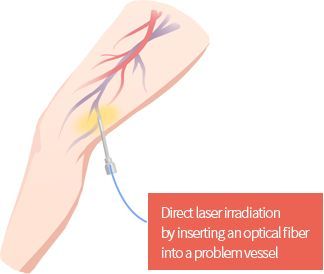
In endovenous laser treatment , the doctor numbs a small spot and enters the vein with a needle under ultrasound. A thin laser fiber is passed up to the right point. Dilute local anesthetic is injected around the vein along its length, then laser energy is delivered as the fiber is slowly withdrawn. The heat seals the vein wall, and the vein is gradually absorbed. At LEDAS, this is done with a 1940nm diode laser and only local anesthesia; you walk out the same day.
How does stripping surgery work?
In stripping, a surgeon makes an incision in the groin or behind the knee, ties off the saphenous vein where it joins the deep vein, and passes a stripping instrument along the vein to pull it out through another cut lower down. Branch veins are often removed at the same time through several small incisions (phlebectomy). Because of the incisions and tissue trauma, general or spinal anesthesia is usually needed. Read more in why LEDAS moved away from stripping .
How do recovery and side effects compare?
After laser
- Walking immediately; light daily activity within a day or two.
- Pulling or tight sensation along the vein for one to two weeks.
- Bruising that fades over two to three weeks.
- No stitches; tiny puncture points.
After stripping
- Recovery from anesthesia, plus healing of incisions.
- More bruising and soreness along the path of the removed vein.
- Scars at the groin or knee and along the leg.
- A higher chance of injury to small skin nerves, causing numbness, especially below the knee.
For a timeline after laser, see the recovery timeline .
Which works better in the long run?
Both can effectively remove saphenous reflux. Recurrence can happen after either, for different reasons. After stripping, new vessels can grow at the old surgical site (neovascularization). After any treatment, reflux can develop in other veins over time. Thorough diagnosis of all refluxing veins and regular follow-up are what most reduce recurrence. LEDAS combines laser with duplex-guided sclerotherapy for hidden branches and a relapse prevention program for this reason.
Who might still need stripping?
Stripping is still performed in some settings, for example in some very large or unusually shaped veins, or where endovenous equipment is not available. At LEDAS, varicose veins are treated with EVLT and sclerotherapy; your doctor will explain after ultrasound whether your veins are suitable.
What does each cost?
Costs vary widely by country and hospital. At LEDAS, the first visit with consultation and ultrasound is 180,000 KRW, and treatment averages about 5,500,000 KRW per leg depending on stage, with an exact quote after the scan. See varicose vein treatment cost in Korea .
Laser (EVLT) vs stripping surgery
| Laser (EVLT at LEDAS) | Stripping surgery | |
|---|---|---|
| Anesthesia | Local only | General or spinal |
| Incisions | None (needle puncture) | Groin or knee plus leg |
| Vein fate | Sealed and absorbed | Physically removed |
| Going home | Same day | Varies; sometimes a hospital stay |
| Return to light activity | Usually within 1–2 days | Usually longer |
| Scarring | Minimal puncture marks | Surgical scars |
| Nerve injury risk | Lower | Higher, especially below the knee |
Laser vs stripping – frequently asked questions
Is laser treatment more effective than stripping?
Both can effectively eliminate reflux in the saphenous vein. Laser does so without incisions or general anesthesia, which generally means an easier recovery. Long-term results depend heavily on treating all refluxing veins and on follow-up, regardless of which method closes the main trunk.
Does laser treatment leave scars like stripping?
No surgical scars are expected after laser, because the vein is accessed through a needle puncture. Stripping leaves incision scars at the groin or knee and along the leg. Temporary bruising is common after either. See will treatment leave scars?
Is stripping cheaper than laser?
It depends on the country, the hospital and whether a hospital stay and general anesthesia are involved. Laser avoids some of those costs but uses specialized equipment. Compare total costs, including time off work and travel. LEDAS gives an exact quote after your ultrasound.
Can I have laser if I already had stripping on the same leg?
Often yes, if a remaining straight vein segment is leaking. Recurrence after stripping frequently involves tangled new vessels, which are usually better treated with ultrasound-guided foam sclerotherapy. The re-operation clinic plans this after ultrasound.
About this page
Clinical information:
LEDAS Varicose Vein Clinic, led by
Dr. Kim Byoung Joon , thoracic and cardiovascular surgeon, founding member of the Korean Society for Phlebology.
Medical reviewer:
Dr. Kim Byoung Joon ·
Review status:
Pending ·
Last updated:
October 2026
This page is general information and not a diagnosis. Treatment is decided only after an in-person examination. Read our
editorial policy .
Related: Why LEDAS moved away from stripping · Surgical vs non-surgical · EVLT vs RFA · EVLT vs VenaSeal · EVLT
See if laser can replace surgery for you
English consultation available · +82-70-4895-5086 · kbjledaspm@gmail.com
