
Treatments · Laser technology
1940nm vs 980nm and 1470nm Lasers for Varicose Veins
Quick answer: All three wavelengths close a leaking vein from the inside with heat. The difference is what absorbs the light. 980nm is taken up mainly by blood, while 1470nm and 1940nm target the water in the vein wall, and 1940nm is absorbed by water most strongly. That lets the energy stay concentrated in the wall. LEDAS in Busan uses a 1940nm diode laser.
Key facts at a glance
- Wavelength is the color of laser light, measured in nanometers (nm). It decides which tissue absorbs the energy.
- 980nm: an older wavelength absorbed mainly by hemoglobin in blood.
- 1470nm: a newer wavelength absorbed mainly by water in the vein wall.
- 1940nm: also water-targeted, with considerably stronger water absorption than 1470nm.
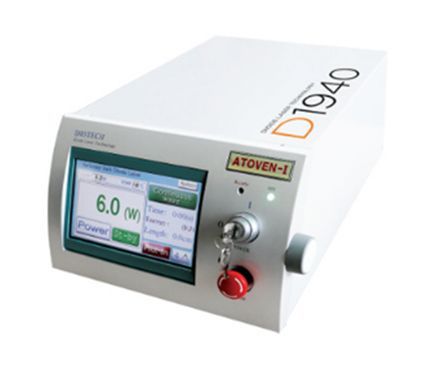
- LEDAS equipment: 2 Diotech 1940nm diode laser units, used under ultrasound guidance.
- Anesthesia: local anesthesia only, no incision, same-day discharge.
- Key point: wavelength matters, but accurate ultrasound mapping and the surgeon's technique matter just as much.
What does laser wavelength mean in vein treatment?
In endovenous laser treatment (EVLT) , a thin laser fiber is passed inside the faulty vein under ultrasound guidance. As the fiber is slowly drawn back, it releases light energy that heats the inner wall. The wall shrinks and seals, and over the following months the body absorbs the closed vein.
Every laser emits light at one wavelength, measured in nanometers. Each wavelength is absorbed by different things in the body. Some are soaked up mostly by hemoglobin, the red pigment in blood. Others are soaked up mostly by water. Because the vein wall is rich in water, a water-targeted laser puts its heat directly where it is needed.
How do 980nm, 1470nm and 1940nm lasers differ?
980nm: the hemoglobin-targeted generation
The 980nm diode laser was among the first widely used vein lasers. Its energy is absorbed mainly by blood inside the vein, which then heats the wall indirectly. It works, but because more energy is needed and heat spreads less evenly, patients treated with early hemoglobin-targeted lasers more often reported bruising and soreness after the procedure.
1470nm: the move to water
The 1470nm laser was designed to target water rather than blood. Since the vein wall itself absorbs the energy, the same closure can be achieved with less power. Many clinics worldwide moved to 1470nm for this reason, and it is still widely used.
1940nm: stronger water absorption
The 1940nm wavelength sits even closer to a peak in water's absorption curve. In practical terms, the light is absorbed within a very short distance of the fiber tip. This concentrates heat in the vein wall and limits spread into the surrounding fat, nerves and skin. It is sometimes described as a newer, fourth-generation vein laser.
Why does LEDAS use a 1940nm laser?
LEDAS treats varicose veins with two Diotech 1940nm diode laser units. The clinic chose this wavelength because its strong water absorption suits the goal of closing the vein wall while protecting nearby tissue. In the clinic's experience, discomfort and bruising after treatment are generally mild, and patients go home the same day.
The laser is never used alone. Before any treatment, the leg is mapped with a duplex ultrasound examination on a Philips EPIQ Elite system, so the doctor knows exactly which vein segments leak. The laser closes the large straight trunks, and smaller or twisted branches are treated with duplex-guided sclerotherapy . You can read more about the device itself on our 1940nm laser equipment page.
Does a newer wavelength automatically mean a better result?
No. Wavelength is one piece of the picture. A good outcome also depends on:
- Accurate diagnosis of every refluxing (backward-flowing) vein, including hidden ones.
- Correct fiber positioning under real-time ultrasound.
- Careful energy settings matched to the diameter of each vein.
- Treating the small branches that a laser fiber cannot follow.
- Follow-up to catch new reflux early.
A well-performed 1470nm treatment can be very effective, and a poorly planned 1940nm treatment can still miss the source of the problem. When you compare clinics, ask how they diagnose and follow up, not just which laser they own.
Which wavelength is right for me?
You don't need to choose a wavelength yourself. What matters is whether your veins are suitable for laser closure at all. Very small spider veins, for example, are better treated with sclerotherapy . Large, straight saphenous veins with confirmed reflux are typical laser candidates. Your doctor will decide after the ultrasound scan and explain the plan using the images on screen.
What does laser treatment cost at LEDAS?
The first visit, including consultation and leg ultrasound, costs 180,000 KRW. Treatment averages about 5,500,000 KRW per leg, depending on disease stage. You receive an exact quote only after your ultrasound. See varicose vein treatment cost in Korea for details.
980nm vs 1470nm vs 1940nm at a glance
| 980nm | 1470nm | 1940nm (used at LEDAS) | |
|---|---|---|---|
| Main absorber | Hemoglobin (blood) | Water in the vein wall | Water in the vein wall (stronger absorption) |
| How heat reaches the wall | Indirectly, via heated blood | Directly | Directly, concentrated near the fiber tip |
| Energy typically needed | Higher | Lower | Lower |
| Heat spread to nearby tissue | More | Less | Designed to be minimal |
| Typical anesthesia | Local (tumescent) | Local (tumescent) | Local only at LEDAS |
1940nm laser – frequently asked questions
Is 1940nm better than 1470nm for varicose veins?
Both are water-targeted lasers and both can close a refluxing vein well. 1940nm is absorbed by water more strongly, so heat stays closer to the vein wall. In practice, results depend just as much on accurate ultrasound mapping and technique. Your doctor will explain why a laser is or is not suitable for your veins.
Why did clinics stop using 980nm lasers?
Many clinics moved on because 980nm energy is absorbed mainly by blood rather than the vein wall, so more power is usually needed and heat spreads less evenly. Water-targeted wavelengths such as 1470nm and 1940nm deliver heat more directly to the wall, which is why they are now more commonly chosen.
Does a 1940nm laser treatment hurt?
Most people feel only the local anesthetic injections and some pressure. After treatment, a pulling or tight feeling along the treated vein for one to two weeks is common, and walking helps it settle. See is varicose vein treatment painful? for more.
Can a 1940nm laser treat spider veins?
No. Endovenous lasers work from inside a vein large enough to hold a fiber, so they are used for the main leaking trunks. Spider and reticular veins are treated with sclerotherapy injections instead, often after the underlying reflux has been closed with the laser.
How many laser units does LEDAS have?
LEDAS has two Diotech 1940nm diode laser units and four Philips EPIQ Elite ultrasound systems. Having the ultrasound in the treatment room lets the doctor guide the fiber and check vein closure in real time during every procedure.
About this page
Clinical information:
LEDAS Varicose Vein Clinic, led by
Dr. Kim Byoung Joon , thoracic and cardiovascular surgeon, founding member of the Korean Society for Phlebology.
Medical reviewer:
Dr. Kim Byoung Joon ·
Review status:
Pending ·
Last updated:
October 2026
This page is general information and not a diagnosis. Treatment is decided only after an in-person examination. Read our
editorial policy .
Related: EVLT · 1940nm laser equipment · EVLT vs RFA · Is laser treatment safe? · Side effects & risks
Find out whether laser treatment suits your veins
English consultation available · +82-70-4895-5086 · kbjledaspm@gmail.com
