
Compare · Laser vs adhesive
EVLT vs VenaSeal (Medical Glue) for Varicose Veins
Quick answer: EVLT seals a leaking vein with heat from a laser fiber and needs tumescent local anesthesia along the vein. VenaSeal, a cyanoacrylate glue system, seals the vein with medical adhesive and avoids tumescent anesthesia, but leaves an implanted material that the body encapsulates. Both are minimally invasive. LEDAS in Busan uses 1940nm EVLT plus sclerotherapy and does not offer glue treatment.
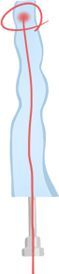
Key facts at a glance
- EVLT: thermal ablation; a laser fiber heats and seals the vein wall from inside.
- VenaSeal: non-thermal closure; small amounts of cyanoacrylate adhesive are injected along the vein and the vein is compressed shut.
- Anesthesia: EVLT uses tumescent local anesthesia; glue needs only a small local injection at the access site.
- What stays in the body: after EVLT, nothing; after glue, the adhesive remains and is gradually encapsulated.
- Possible glue-specific reaction: an inflammatory or allergic-type skin reaction over the treated vein in some patients.
- At LEDAS: EVLT (1940nm) + duplex-guided sclerotherapy + sclerotherapy; glue treatment is not offered.
What is VenaSeal?
VenaSeal is a brand of medical adhesive system used to close refluxing saphenous veins. Under ultrasound guidance, a thin catheter is placed in the vein. Small amounts of a cyanoacrylate-based glue are delivered at intervals while the doctor presses on the leg to squeeze the vein walls together. The glue bonds the walls, blood stops flowing through that segment, and over time the body walls off the glue with scar tissue. It is often called "glue" or "cyanoacrylate closure."
What is EVLT?
Endovenous laser treatment uses a laser fiber about as thin as a hair, introduced through a needle puncture. Dilute local anesthetic is injected around the vein along its length (tumescent anesthesia) to numb it, compress it onto the fiber and protect surrounding tissue. As the fiber is withdrawn, laser energy heats and seals the wall. The closed vein is absorbed over the following months. At LEDAS, EVLT uses a 1940nm diode laser.
How do EVLT and VenaSeal compare?
Anesthesia and comfort during the procedure
The main practical advantage claimed for glue is that it does not need tumescent anesthesia, so there are fewer needle sticks along the leg. EVLT requires a series of anesthetic injections, which most people describe as the most noticeable part of the procedure; once they are done, the laser itself is usually comfortable.
Heat and nerves
Because glue is non-thermal, there is no heat to irritate nearby skin nerves. With EVLT, the tumescent fluid layer and water-targeted wavelengths like 1940nm are designed to limit heat spread, but temporary numbness can still occur, particularly below the knee.
Material left behind
After EVLT, nothing foreign remains: the vein is sealed by the body's own tissue reaction and absorbed. After glue, the adhesive remains in the leg and is gradually encapsulated. Some patients develop a local inflammatory reaction over the treated vein, sometimes described as phlebitis-like or allergic-type, which is usually manageable but can be prolonged. People with known sensitivity to acrylates are generally not suitable for glue.
Compression and recovery
Compression stockings are typically advised after EVLT; after glue, some protocols use less or no compression. With both, walking is encouraged and same-day discharge is the norm.
Branches still need treatment
Neither method treats twisted branch veins or perforators well. These are usually handled with foam sclerotherapy or phlebectomy. At LEDAS, they are treated with duplex-guided sclerotherapy .
Why does LEDAS use EVLT rather than glue?
LEDAS has built its approach around EVLT combined with ultrasound-guided sclerotherapy. Laser closure leaves no implanted material, and the clinic uses a 1940nm wavelength chosen to concentrate heat in the vein wall. Pairing it with real-time ultrasound on Philips EPIQ Elite systems allows precise fiber positioning and confirmation of closure. LEDAS does not offer VenaSeal or other adhesive treatments.
How should I decide?
Both methods can close a suitable saphenous trunk effectively. Ask any clinic you are considering about their diagnosis process, which veins will be treated, how branches are handled, and what follow-up they provide. A good result depends more on complete diagnosis and planning than on the closure method alone. See also EVLT vs RFA and how to choose a vein clinic .
EVLT vs VenaSeal side by side
| EVLT (laser) | VenaSeal (glue) | |
|---|---|---|
| Closure mechanism | Heat | Cyanoacrylate adhesive |
| Tumescent anesthesia | Yes | No |
| Foreign material left | None | Adhesive remains, encapsulated |
| Typical side effects | Pulling pain, bruising; occasional numbness | Possible local inflammatory/allergic-type reaction |
| Compression afterward | Usually advised | Varies by protocol |
| Branch veins | Need sclerotherapy | Need sclerotherapy or phlebectomy |
| Available at LEDAS | Yes, 1940nm | No |
EVLT vs VenaSeal – frequently asked questions
Is VenaSeal better than laser for varicose veins?
Not necessarily. Glue avoids tumescent anesthesia and heat, while laser leaves no implanted material and has a long track record. Both can close suitable saphenous veins effectively. The best choice depends on your veins, your health and the clinic's experience with each method.
Does VenaSeal glue stay in the body forever?
The adhesive is not absorbed like a heat-sealed vein; it remains and is gradually walled off by the body's tissue. Most people have no problems with this, but some develop a local inflammatory reaction. Discuss any allergies, particularly to acrylates, with your doctor.
Does LEDAS offer glue treatment?
No. LEDAS treats varicose veins with endovenous laser treatment using a 1940nm diode laser, combined with ultrasound-guided sclerotherapy and surface sclerotherapy, all under local anesthesia. Your doctor will explain why this approach is or is not suitable after your ultrasound.
Which treatment lets me return to work faster?
Both typically allow walking straight away and a quick return to light daily activity, often within a day or two. Recovery depends more on how many veins are treated and on your job than on laser versus glue. See the recovery timeline.
About this page
Clinical information:
LEDAS Varicose Vein Clinic, led by
Dr. Kim Byoung Joon , thoracic and cardiovascular surgeon, founding member of the Korean Society for Phlebology.
Medical reviewer:
Dr. Kim Byoung Joon ·
Review status:
Pending ·
Last updated:
October 2026
This page is general information and not a diagnosis. Treatment is decided only after an in-person examination. Read our
editorial policy .
Related: EVLT vs RFA · Surgical vs non-surgical · Sclerotherapy vs laser · EVLT · Side effects & risks
Get a clear recommendation for your veins
English consultation available · +82-70-4895-5086 · kbjledaspm@gmail.com
