
Varicose Vein FAQ · Health Conditions
Varicose Veins and Diabetes
Quick answer: Diabetes does not cause varicose veins, but having both matters. Diabetes slows skin healing and reduces sensation in the feet, while venous disease causes swelling and skin damage around the ankles. Together they raise the risk of leg ulcers that heal slowly. People with diabetes and varicose veins should have their veins checked with ultrasound and their skin watched closely.
Key facts at a glance
- Different diseases: varicose veins are a vein (return-flow) problem; diabetes mainly harms small vessels, nerves and arteries.
- Shared risk: both damage the skin of the lower leg and slow healing.
- Ulcer types: venous ulcers usually form near the inner ankle; diabetic foot ulcers usually form on the foot.
- Arteries first: people with diabetes should have arterial circulation considered before compression or vein treatment.
- Treatment: needle-based EVLT and sclerotherapy, with no incision, are options for many people with well-managed diabetes.
- Daily habit: check your legs and feet every day for wounds, color change or swelling.
Does diabetes cause varicose veins?
No. Varicose veins come from weak vein walls and failing valves, driven by family history, age, pregnancy, long standing or sitting and excess weight. Diabetes mainly affects blood sugar control, nerves, small blood vessels and arteries.
However, the two conditions often occur together, because they share some risk factors such as older age, reduced activity and excess weight. When they do, each can make the effects of the other worse.
Why is the combination a concern?
Skin under pressure
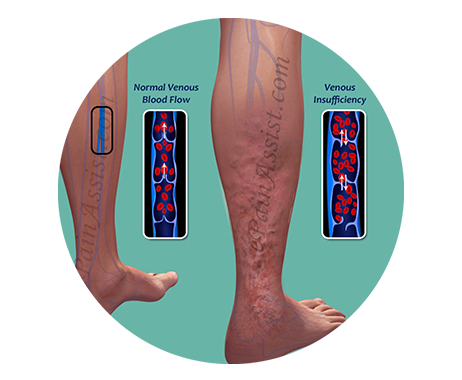
Untreated varicose veins raise pressure in the lower leg. Over time this can cause swelling, darkening and hardening of the skin, and eventually venous leg ulcers . These are stages C3 to C6 on the CEAP scale .
Slower healing
High blood sugar slows wound healing and makes infection more likely. A small scratch on a swollen, fragile ankle can become a stubborn wound.
Reduced sensation
Diabetic nerve damage (neuropathy) can mean you do not feel a cut, blister or pressure sore until it is advanced.
Mixed circulation problems
Diabetes raises the risk of peripheral arterial disease, where the arteries bringing blood to the legs narrow. A leg can have both poor arterial inflow and poor venous return. This changes which treatments are safe: strong compression, for example, can harm a leg with poor arterial supply.
How do I tell venous symptoms from diabetic symptoms?
- Venous: heaviness and aching that worsen through the day and ease with leg elevation; ankle swelling; itching; brownish skin near the ankles.
- Diabetic nerve: numbness, tingling, burning or pins and needles in the feet, often worse at night.
- Arterial: calf pain when walking that eases with rest; cold, pale feet; weak foot pulses.
Many people have more than one. An examination sorts out which problem is driving which symptom.
Can people with diabetes have varicose vein treatment?
Many can, especially when diabetes is reasonably well controlled. Treating refluxing veins lowers the pressure that damages ankle skin, which may help protect the leg.
At LEDAS, treatment uses local anesthesia and no incisions , which suits many patients with chronic illness:
- EVLT closes main leaking veins through a needle puncture.
- Duplex-guided sclerotherapy treats hidden veins with injections; LEDAS notes that injection therapy is well tolerated by elderly patients and those with serious chronic illness.
When ulcers or necrosis are already present, LEDAS recommends ultrasound-guided sclerotherapy first rather than surgery.
How treatment is planned
- Consultation covering your diabetes control, medicines and any foot problems.
- Duplex ultrasound to map venous reflux and check the veins.
- Consideration of arterial circulation before using compression.
- A plan that may be staged to keep each session smaller.
- Careful aftercare with daily skin checks.
Daily leg care if you have both conditions
- Check your legs and feet every day, using a mirror if needed.
- Moisturise dry skin, but not between the toes.
- Walk daily to work the calf pump.
- Raise your legs when resting.
- Wear well-fitting shoes; never walk barefoot outdoors.
- Keep blood sugar in your target range.
See a doctor promptly for any wound that has not improved in a few days, spreading redness, or warmth. Seek emergency care for sudden one-leg swelling, chest pain or breathlessness.
Venous vs diabetic leg problems
| Venous disease (varicose veins) | Diabetes-related | |
|---|---|---|
| Main cause | Faulty vein valves, high venous pressure | High blood sugar harming nerves and vessels |
| Typical feeling | Heavy, aching, swollen by evening | Numbness, tingling, burning in feet |
| Typical ulcer site | Above the inner ankle | Sole, toes, pressure points of the foot |
| Skin changes | Brown staining, hardening, eczema near ankles | Dry, cracked skin; calluses |
| Key test | Duplex ultrasound for reflux | Blood sugar, foot sensation, arterial checks |
Varicose veins and diabetes – frequently asked questions
Can diabetics wear compression stockings?
Often yes, but check first. Diabetes raises the risk of narrowed leg arteries, and compression can be harmful when arterial flow is poor. A doctor should assess your circulation and recommend a suitable pressure. See choosing and wearing compression stockings.
Does diabetes slow recovery after vein treatment?
It can slow healing of any skin break, but EVLT and sclerotherapy involve only needle punctures, not incisions. Keeping blood sugar in range, walking daily and following aftercare closely support recovery. Report any puncture site that becomes red, warm or weeping.
Should I eat before treatment if I have diabetes?
Treatment at LEDAS uses local anesthesia only, so most patients can eat a light meal. Tell the clinic about your diabetes medicines and follow their instructions on meals and doses so your blood sugar stays stable on the day.
Is a leg ulcer from diabetes or from veins?
Location helps: venous ulcers usually appear above the inner ankle with surrounding brown, hardened skin; diabetic ulcers tend to form on the foot. Many ulcers have mixed causes, so an examination including vein ultrasound and arterial checks is needed.
About this page
Clinical information:
LEDAS Varicose Vein Clinic, led by
Dr. Kim Byoung Joon , thoracic and cardiovascular surgeon, founding member of the Korean Society for Phlebology.
Medical reviewer:
Dr. Kim Byoung Joon ·
Review status:
Pending ·
Last updated:
October 2026
This page is general information and not a diagnosis. Treatment is decided only after an in-person examination. Read our
editorial policy .
Related: Venous leg ulcers · Skin changes · Blood thinners & treatment · Complications · Weight & varicose veins
Protect your legs: get your veins checked
English consultation available · +82-70-4895-5086 · kbjledaspm@gmail.com
